

 English
 Español

If your Stihl chainsaw starts losing speed in the cut after you fitted a longer bar, the problem is not the carburetor. It is the bar sizing. On a Stihl chainsaw, the guide bar controls cutting depth, chain support, and how much load the engine has to pull. The correct bar size is the shortest bar that covers the largest log you regularly cut, matched to the chain pitch and gauge your saw is designed to run. That single rule eliminates most chainsaw performance complaints before they start.
Content
- 1 Reading the numbers on a Stihl guide bar
- 2 Stihl chainsaw bar size chart by engine class
- 3 Bar length and real cutting capacity
- 4 Guide bar types: length alone is not enough
- 5 Matching the chain: pitch, gauge, and drive links
- 6 What to inspect before you replace a Stihl guide bar
- 7 Putting the Stihl bar size chart to work
Reading the numbers on a Stihl guide bar
Stihl stamps the essential values into the tail of almost every guide bar it produces. A typical marking looks like "16" 3/8"P .050"", which means a 16-inch bar, a 3/8-inch low-profile pitch, and a 0.050-inch gauge. Metric bars show the same information as "40 cm 3/8"P 1.3 mm". The pitch is the distance between the centers of two adjacent drive-link rivets, and the gauge is the thickness of the drive link as it slides through the bar groove.
When the stamp is worn away, measure the pitch across three rivets, measure the gauge with a caliper, and count the drive links on the chain loop. Combined with the bar length, those four numbers are everything you need to order a replacement that fits.
Stihl chainsaw bar size chart by engine class
Stihl does not build one universal bar. Each engine displacement range is designed to pull a specific length of bar without stalling. The table below shows the factory-recommended bar length ranges for Stihl engine classes.
| Engine class | Typical Stihl models | Recommended bar length |
|---|---|---|
| 25-35 cc | MS 170, MS 180 | 12-14 in |
| 40-45 cc | MS 230, MS 250, MS 251 | 14-16 in |
| 50-59 cc | MS 271, MS 291 | 16-18 in |
| 60-70 cc | MS 311, MS 361, MS 391 | 18-20 in |
| 70-90 cc | MS 440, MS 461 | 20-25 in |
| 90 cc and above | MS 660, MS 661 | 25-36 in |
Placing your saw into the correct class matters more than chasing the biggest number. Understanding the types of chainsaws and saw chains used in each class helps you position your model before you buy a longer bar.
Bar length and real cutting capacity
A longer bar increases the maximum log diameter you can cut in a single pass, but it also adds weight, friction, and tip leverage that slow the chain. The practical cutting diameter of a bar is normally about 2 to 4 inches shorter than its nominal length. A 16-inch bar reaches through roughly 14 inches of wood; a 20-inch bar handles about 18 inches. If most of your wood is smaller than that, a long bar only makes the saw harder to handle.
| Stihl model | Displacement | Typical bar size | Chain pitch |
|---|---|---|---|
| MS 170 | 30 cc | 14 in | 3/8" LP |
| MS 250 | 45 cc | 16 in | 3/8" LP |
| MS 291 | 55 cc | 18 in | .325" |
| MS 311 | 59 cc | 20 in | 3/8" |
| MS 361 | 59 cc | 18-20 in | 3/8" |
| MS 391 | 64 cc | 20 in | 3/8" |
| MS 461 | 76 cc | 20-25 in | 3/8" |
| MS 661 | 91 cc | 25-28 in | 3/8" |
Use these figures as a starting point, not a law. Your cutting conditions matter: a saw used for limbing will perform better with the shorter end of the range, while a saw used for felling benefits from one step longer.
Guide bar types: length alone is not enough
Bar length gets the most attention in any size chart discussion, but the construction of the bar decides how it feels in the cut and how long it lasts. There are three dominant designs in the market, and each one suits a different work pattern.
Hardnose guide bars
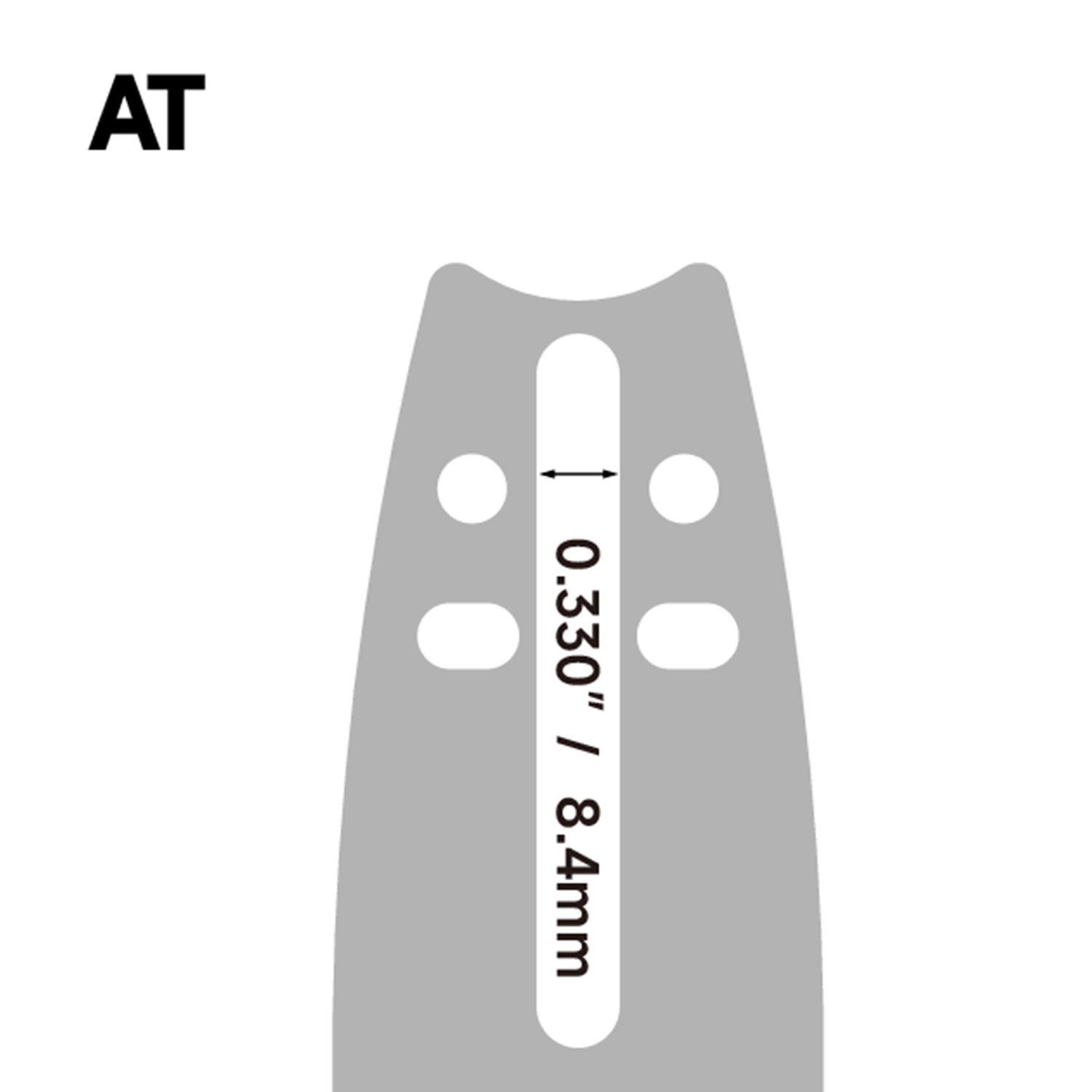
Hardnose bars use a solid steel tip with no moving parts. They cost less and tolerate abrasive dust far better than sprocket-nose designs, but they create more friction because the chain slides over steel. For demolition, sanding debris, and dirty firewood cutting, that is a fair trade. If that matches your work, an Iridge hardnose guide bar offers the same configuration with a heat-treated alloy body built for heavier duty cycles.
 Wholesale HARDNOSE GUIDE BAR Suppliers, ExporterAs Wholesale HARDNOSE GUIDE BAR Suppliers and exporter in China, Hangzhou Shenling Technology Co., Ltd offer OEM wholesale HARDNOSE GUIDE...View Product →
Laminated guide bars
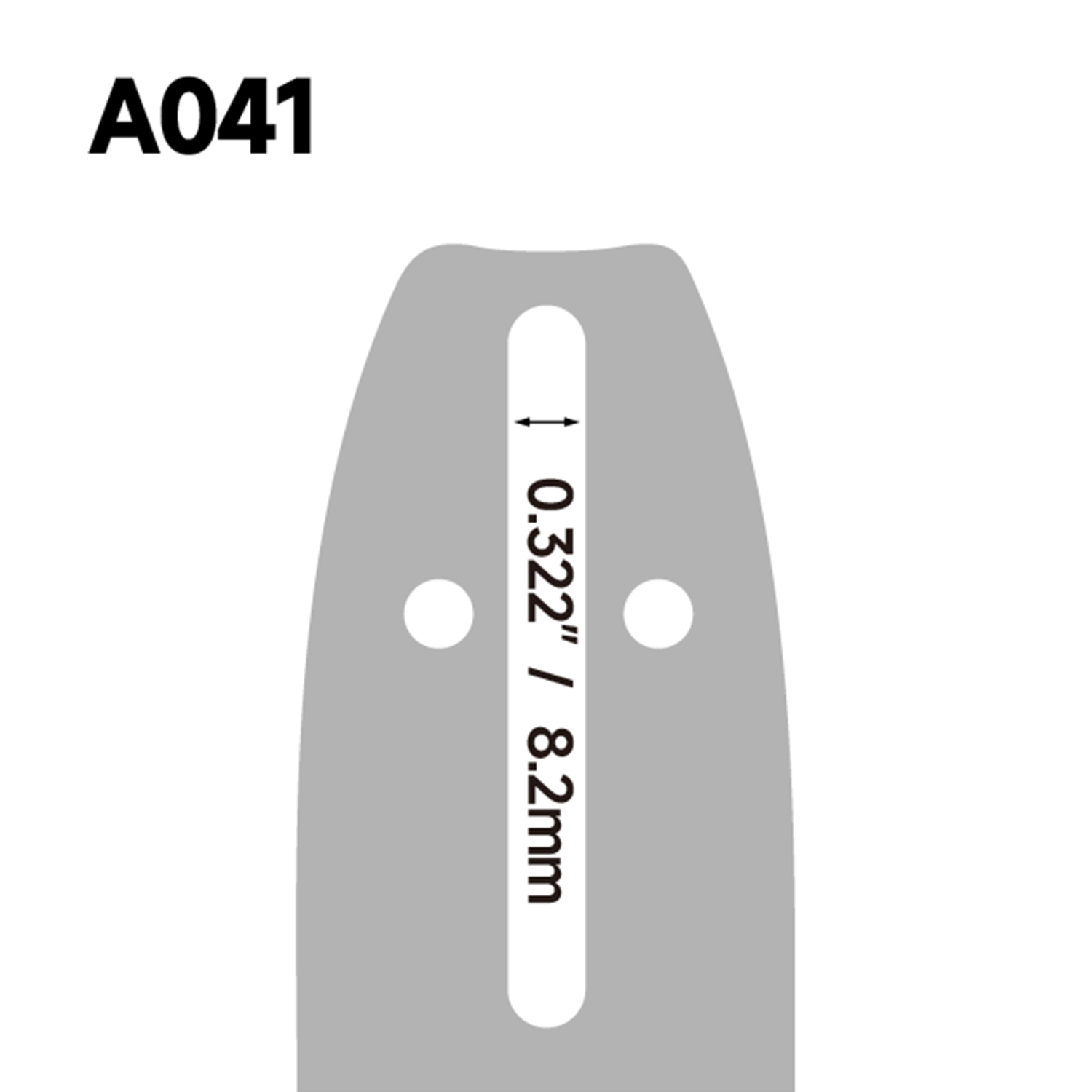
Laminated bars are made from several stamped steel layers brazed into one body. They are lighter, produce less vibration, and normally cost less than solid bars of the same length. Most homeowner and farm Stihl bars are laminated. An Iridge laminated guide bar is a direct fit that keeps the weight down while maintaining a stable groove for the chain.
 Wholesale LAMINATED GUIDE BAR Suppliers, ExporterAs Wholesale LAMINATED GUIDE BAR Suppliers and exporter in China, Hangzhou Shenling Technology Co., Ltd offer OEM wholesale LAMINATED GUI...View Product →
Replaceable sprocket nose guide bars
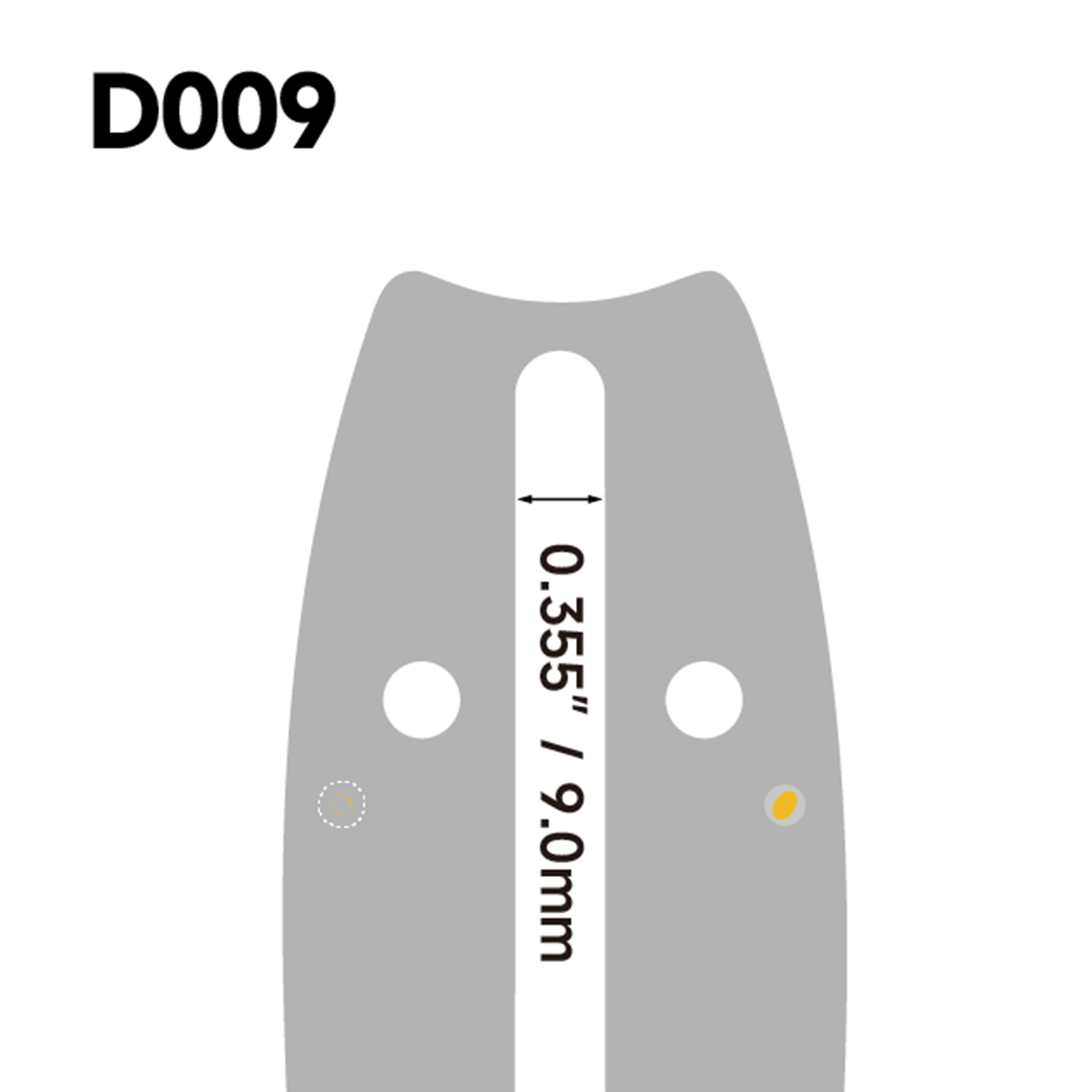
The professional standard, a replaceable sprocket nose bar adds a small sprocket in the tip that reduces friction and keeps chain speed higher around the nose. When the nose wears out, you replace only that part instead of the whole bar. For full-time professional cutting, an Iridge replaceable sprocket nose guide bar extends the overall service life and keeps the chain moving smoothly under load.
 Wholesale REPLACEBLE SPROCKET NOSE GUIDE BAR Suppliers, ExporterAs Wholesale REPLACEBLE SPROCKET NOSE GUIDE BAR Suppliers and exporter in China, Hangzhou Shenling Technology Co., Ltd offer OEM wholesal...View Product →
Whichever type you pick, guide bar design has a direct influence on both safety and cutting efficiency, so it is worth checking the rail profile, nose type, and tail geometry before you commit.
Matching the chain: pitch, gauge, and drive links
Buying a bar and a chain separately is where mismatches happen. The bar length only determines the range of chain loops that can fit. The pitch, gauge, and drive-link count decide which exact loop is compatible.
- Pitch is the distance between drive-link rivets. Stihl chains use 1/4", 3/8" LP, .325", 3/8", and .404". A bar stamped for 3/8" will not accept a .325" chain.
- Gauge is the thickness of the drive link. Common values are .043", .050", .058", and .063". A chain with a thicker gauge will jam in the groove, while a thinner gauge rails from side to side and wears the bar unevenly.
- Drive links count the number of drive teeth on the loop. A 66-drive-link chain and a 64-drive-link chain may both be sold as 16-inch loops, but they are not interchangeable.
After installing the correct chain, keep it at the proper tension. Improper chain tension is one of the fastest ways to damage a new bar: too loose, and the chain beats the rails out of the groove; too tight, and the nose sprocket overheats. Check tension before every session, and you will significantly extend the life of both bar and chain.
What to inspect before you replace a Stihl guide bar
Before placing an order, take five minutes to inspect the old bar. A worn bar quietly damages a new chain, and a worn nose sprocket can do the same to a new bar.
- Check the groove depth along the full length. If the groove sits shallower in the middle than at the ends, the bar is worn past the point where a chain will track correctly.
- Turn the nose sprocket by hand. It should spin smoothly with no side-play and no stiffness.
- Blow out the oil holes in the tail. Blocked oil delivery is the most common cause of premature bar wear.
- Run a straightedge along the rails to spot a twisted bar. A bent bar will cut crooked no matter how sharp the chain is.
- Confirm the drive-link count by wrapping the chain around the bar before you install it.
Putting the Stihl bar size chart to work
The Stihl chainsaw bar size chart is not a single magic number; it is a range that your engine can pull, narrowed by the pitch and gauge your saw uses, and finally shaped by the work you do. Match the bar to the engine class first, match the chain to the bar, and pick the construction type according to your dust, vibration, and duty requirements.
If your old bar still carries readable numbers, use those as the anchor and compare them against the table. If the numbers are gone, measure the chain and let the engine class set the limits. A correctly sized guide bar will cut faster, stay cooler, and keep your Stihl stable in the cut.

