

 English
 Español

Content
- 1 The Real Limit on a Long Bar Chainsaw Is Not the Bar
- 2 What Counts as a Long Bar Chainsaw?
- 3 Why Bar Length Changes Cutting Performance
- 4 Matching Engine Power to Bar Length
- 5 Guide Bar Construction: Three Options for Long Bars
- 6 Chain Pitch and Gauge for Long Bars
- 7 Tension and Lubrication: Where Long Bars Fail
- 8 Buying Checklist for a Long Bar Chain Saw Setup
- 9 Match the Whole Drive System, Not Just the Bar
The Real Limit on a Long Bar Chainsaw Is Not the Bar
A 24-inch bar on a 45cc saw will not cut faster. It will stall, overheat the clutch, and drag the chain through a poor cut. A long bar chainsaw only works when the bar length, engine displacement, chain pitch, and oil delivery are matched to the job. This guide explains what changes when you move to a longer guide bar, how to match it to your saw, and which components deserve attention before you buy.
What Counts as a Long Bar Chainsaw?
In handheld chain saws, a guide bar longer than 20 inches (51 cm) is generally considered long. Common lengths are 24, 28, 32, and 36 inches. Mill saws and specialized felling rigs go beyond 42 inches, but those setups stop being practical for one-person limbing or firewood cutting.
Corded electric chainsaws rarely enter this range. Some stationary electric mill saws support 28-inch bars, but they require 400V three-phase power and weigh over 30 kg, which places them in a workshop rather than on a shoulder.
There is also a common misunderstanding about how bar length is measured. The number on the label is the total length of the guide bar, not the maximum cut length. A 20-inch bar usually produces a cut of roughly 16 to 18 inches depending on the tail mount and chain pitch. If the job requires a 24-inch cut, you need at least a 28-inch bar.
Why Bar Length Changes Cutting Performance
A longer bar increases the contact surface between the chain and the guide bar rail. Friction rises, and the engine needs more torque to keep the chain moving at cutting speed. Longer bars also flex more under load, and the chain stretches further along a longer span. These factors are why every saw manufacturer publishes a maximum bar length for each model. A 40cc saw is typically rated for a 16- to 18-inch bar; pushing it to 24 inches makes the saw slower, not faster.
The safety side is just as direct. In a pinched cut, a long bar behaves like a lever and can throw the saw sideways with more force than a short bar. Operators who are not used to the extra reach are more likely to lose control during the final part of a cut.
Matching Engine Power to Bar Length
The fastest way to judge a long bar setup is by engine displacement. The table below is a practical rule of thumb for handheld saws, not a substitute for the maximum bar rating printed in the saw manual.
| Engine displacement | Typical maximum bar length | Work profile |
|---|---|---|
| 35–45 cc | 16–20 in (40–51 cm) | Limbing, firewood, light bucking |
| 50–60 cc | 20–24 in (51–61 cm) | General felling, bucking |
| 65–80 cc | 24–32 in (61–81 cm) | Large timber, milling |
| 85 cc and above | 32–42+ in (81–107+ cm) | Professional felling, production milling |
The torque curve matters just as much as peak power. A saw that feels strong in a 12-inch log may still struggle with a 28-inch bar because the clutch and oil pump were sized for a shorter bar. If you plan to run a long bar chain saw for hours, choose a saw with an adjustable oil pump and enough output for the longer rail. Beyond these limits, the bar becomes too big not because it cannot be mounted, but because the saw cannot sustain cutting speed without excessive wear.
Guide Bar Construction: Three Options for Long Bars
The guide bar is not a passive steel rail. Its construction affects weight, wear, and the way the chain behaves under load. Three types cover nearly all long bar applications.
Hardnose Guide Bar
A hardnose guide bar has a solid steel nose with a machined rail. It has no moving parts at the tip, which makes it heavier and slightly slower but significantly more resistant to abrasive work such as cutting dirty timber or milling near soil. For operators in those conditions, hardnose is the more durable long-term choice.
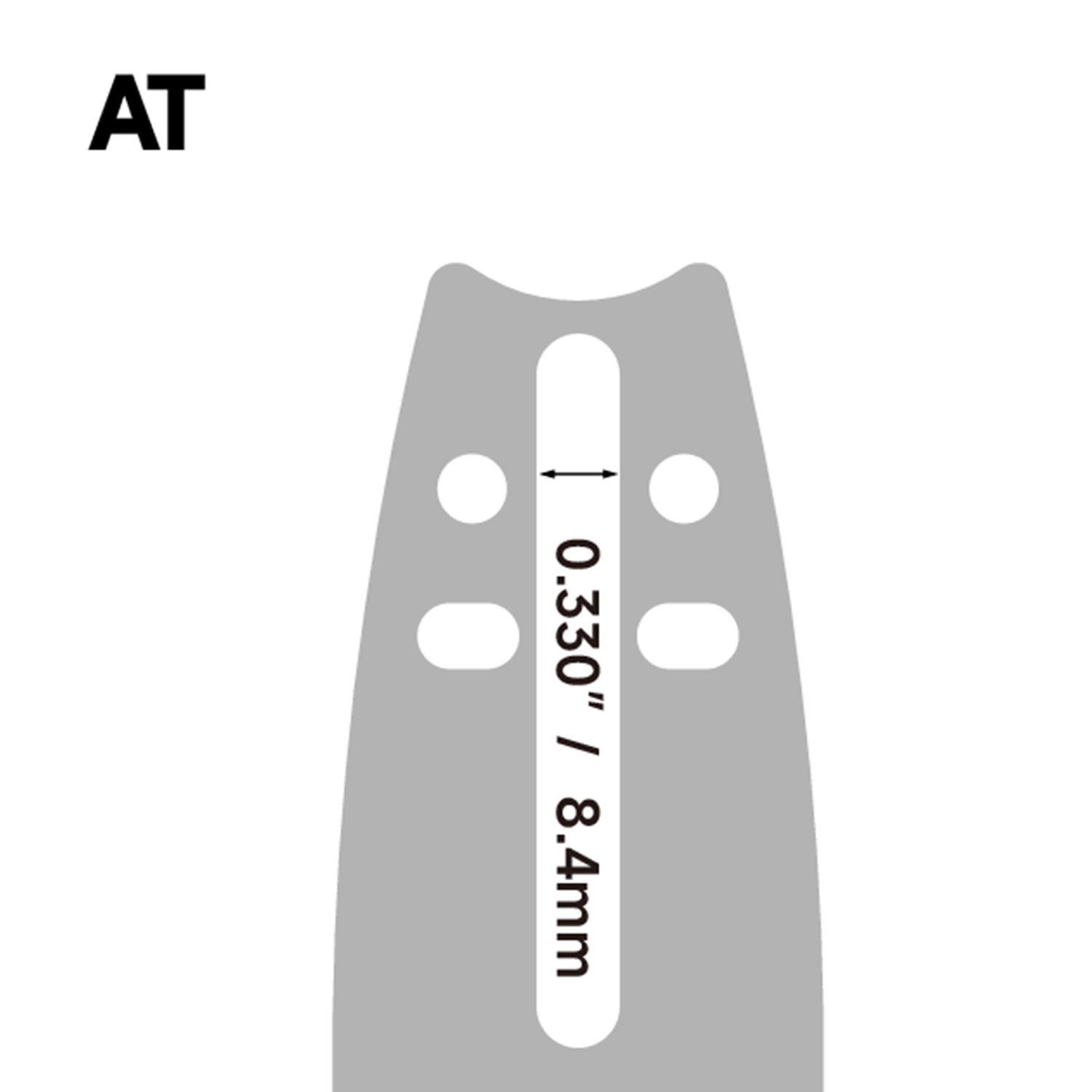 Wholesale HARDNOSE GUIDE BAR Suppliers, ExporterAs Wholesale HARDNOSE GUIDE BAR Suppliers and exporter in China, Hangzhou Shenling Technology Co., Ltd offer OEM wholesale HARDNOSE GUIDE...View Product →
Iridge heat-treats this bar in the same facility used for the company's other guide bar lines, so the rail keeps its shape under sustained tension.
Laminated Guide Bar
A laminated bar is built from multiple steel plates welded together. It is lighter and cheaper, which makes it popular on mid-size saws. For long bars, lamination has a clear downside: under heavy clamping load, the nose area can flex more than a solid design, and the weld lines become wear points if the bar is run with insufficient oil. It is acceptable for occasional 24-inch use, but less ideal for daily professional cutting.
Replaceable Sprocket Nose Guide Bar
A replaceable sprocket nose guide bar uses a small chain sprocket in the nose. The sprocket reduces friction and helps the chain hold speed around the tip, which matters on long bars where nose friction is high. The sprocket is the main wear part, and it can be replaced without replacing the whole bar. That makes this design common for professional felling and milling, where the bar runs at high RPM for long periods.
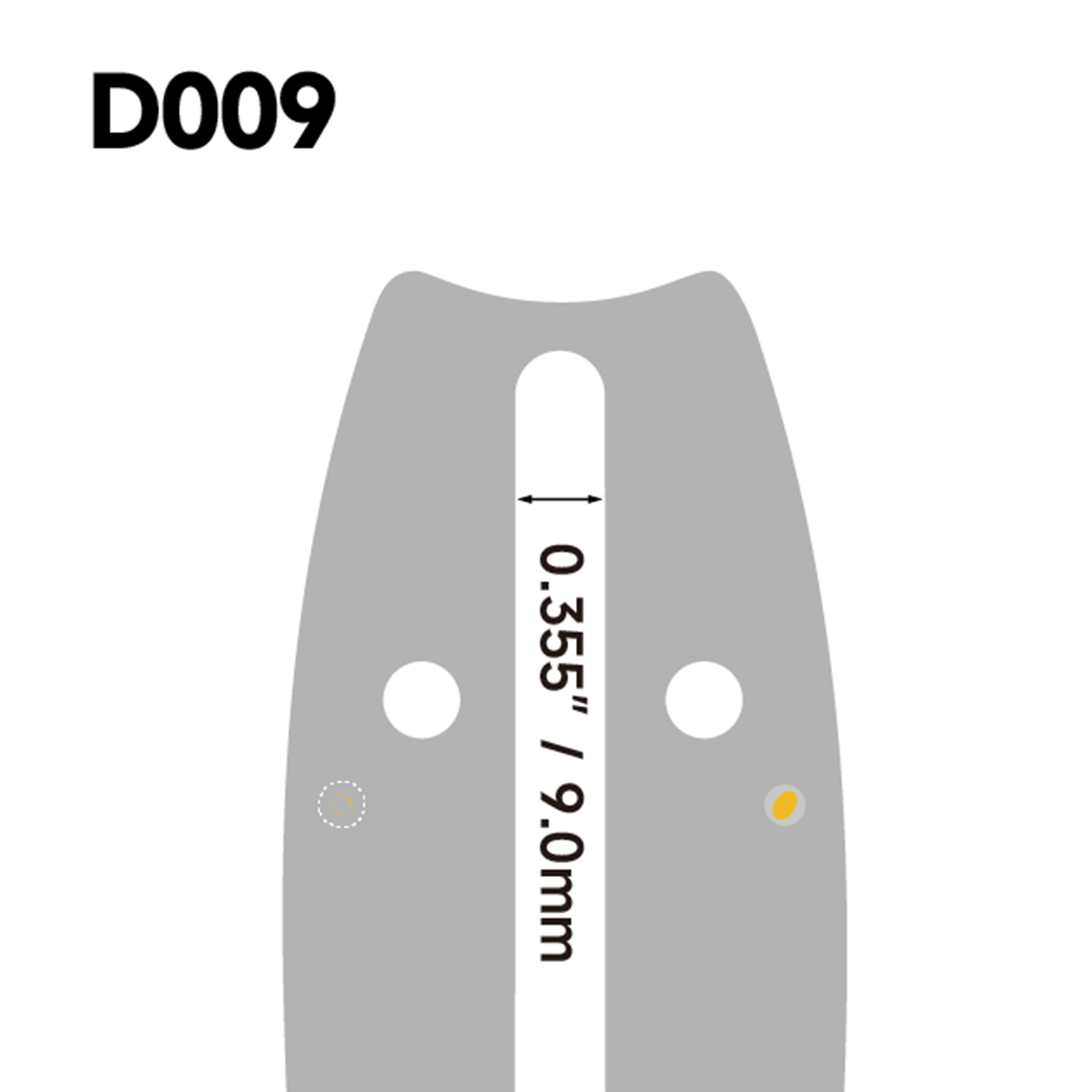 Wholesale REPLACEBLE SPROCKET NOSE GUIDE BAR Suppliers, ExporterAs Wholesale REPLACEBLE SPROCKET NOSE GUIDE BAR Suppliers and exporter in China, Hangzhou Shenling Technology Co., Ltd offer OEM wholesal...View Product →
For sustained high-speed cutting, this nose design keeps wear predictable and the chain cooler.
Chain Pitch and Gauge for Long Bars
Chain pitch is the distance between three consecutive rivets divided by two. It determines how the chain seats on the bar rails, the sprocket nose, and the drive sprocket. For long bars, two pitches dominate: 3/8-inch and 0.404-inch.
The 3/8-inch pitch chainsaw chain is the workhorse for 24- to 36-inch bars on mid-size and large saws. It balances cutting speed, chain strength, and vibration. For saws above 85 cc running 32-inch or longer bars, 0.404-inch pitch provides a thicker, stronger chain that survives production felling better, though it cuts slightly slower and creates more drag.
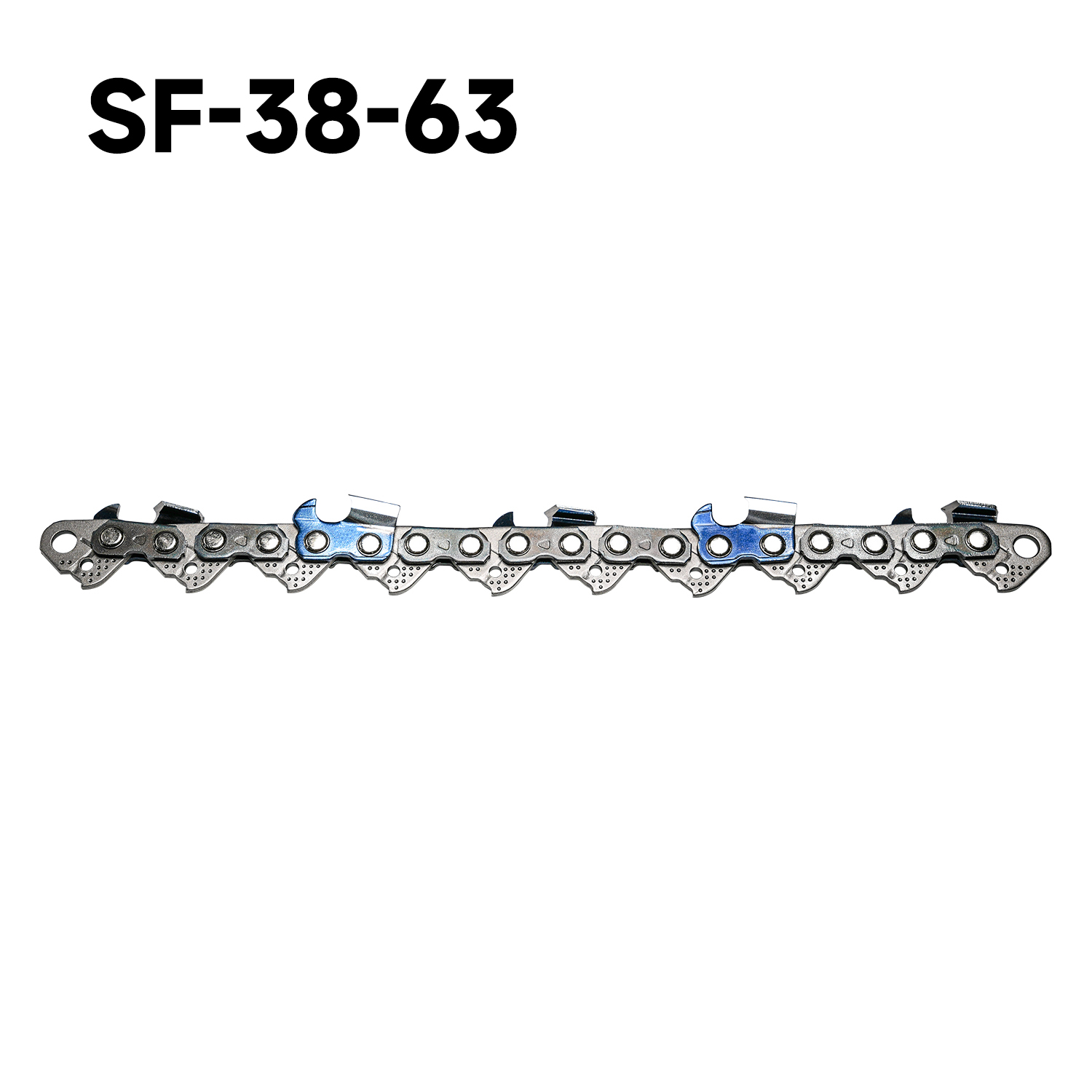 Wholesale 3/8" Pitch Chainsaw Chain Suppliers, ExporterAs Wholesale 3/8' Pitch Chainsaw Chain Suppliers and exporter in China, Hangzhou Shenling Technology Co., Ltd offer OEM wholesale 3/8' Pi...View Product →
Gauge refers to the thickness of the drive links. Long bars usually run thicker gauges — 0.058 or 0.063 inch — because the thicker drive link stays straighter in the groove under load. Mixing a thin-gauge chain with a wide groove is a common cause of repeated derailment.
Do not use a 3/8-inch low-profile (LP) chain on a long bar. LP chains are designed for small saws with short bars and low chain speed. Run on a long bar, they stretch faster, derail more often, and increase kickback risk.
Tension and Lubrication: Where Long Bars Fail
Long bars expose chain tension errors quickly. A chain that is too loose on a 28-inch bar can derail in the cut and damage the rail, chain, and clutch. A chain that is too tight pulls constant drag and accelerates wear on the bar rails and drive sprocket. The link between chain tension and guide bar wear resistance is direct enough that professional operators check tension at every refuel.
Lubrication is equally critical. A long bar has more rail surface to cover, and the oil must travel the full distance from the oil port to the nose. If the saw's oil pump cannot deliver enough volume, the nose runs dry, the rail discolors, and the chain seizes in the groove. This is why long bars are usually paired with saws that have adjustable or high-output oil pumps.
Thermal expansion also plays a role. A long bar heats up faster than a short one because of the extra friction surface. A chain tensioned in the morning on a cold bar can become too tight after twenty minutes of cutting. Professional operators set the chain slightly loose when the bar is cold and check it again once the bar reaches operating temperature.
Buying Checklist for a Long Bar Chain Saw Setup
Before you order a longer bar, work through this list.
- Confirm the saw manufacturer's maximum bar length for your model. Exceeding it puts excess strain on the clutch, oil pump, and operator.
- Check the tail mount pattern. Guide bars are not interchangeable between mount types, and ordering the wrong mount is the most common error in long bar upgrades.
- Match the nose type to the work. Abrasive timber suits a hardnose bar; sustained high-speed cutting suits a sprocket nose bar.
- Match the chain pitch and gauge to the bar and drive sprocket. A mismatched chain will not seat correctly and will wear both components unevenly.
- Measure the actual cut length you need, then add several inches to the bar length to account for the tail mount and nose design.
When comparing guide bars, the Iridge product catalog shows the available tail mounts and nose styles in one place, which makes it easier to narrow down what fits your saw before you talk to a supplier.
Match the Whole Drive System, Not Just the Bar
A long bar chain saw is a system. The bar, chain, sprocket, oil pump, and engine displacement all have to work together. Buying a longer bar without checking the chain, sprocket, or oil pump usually ends in poor cutting performance and short component life.
That is also why supplier experience matters. Iridge has spent more than 24 years in heat treatment and metal processing. You can read about that process history on the Iridge company website. For long bars especially, rail hardness, groove consistency, and tail-mount precision decide whether a bar works for one season or for several years.

