

 English
 Español

When a new guide bar is stamped with a row of numbers, most of us look at the first number and think "that's the size." Then we install a chain that does not quite fit. The surface is wrong, the saw vibrates, and the cutting becomes a fight.
The string of numbers on a chainsaw bar is not a random part number. It is a compact specification sheet. Once you know how to read chainsaw bar numbers, you can match the bar to the chain, order a replacement without guesswork, and avoid the downtime that comes from mismatched parts.
Content
What the Numbers on a Chainsaw Bar Mean
Different manufacturers arrange their codes differently, but the same four measurements appear almost every time: bar length, chain pitch, chain gauge, and drive link count. Some codes add letters for the nose type or tail-mount shape. In a common format, the code might look like 18-3/8-.050-72, and each segment maps to one specification.
| Code Segment | Meaning | Example |
|---|---|---|
| 18 | Bar cutting length in inches | 18-inch guide bar |
| 3/8 | Chain pitch | 3/8-inch pitch chain |
| .050 | Chain gauge | 0.050-inch drive link thickness |
| 72 | Drive link count | 72 drive links on the chain loop |
| S | Nose and mount style | Replaceable sprocket nose |
Bar Length
Cutting length is measured from the tip of the bar to the point where the bar emerges from the saw body. This is not the total physical length of the guide bar, and many people measure too far. If you read a 20-inch code on your bar, expect to replace it with another 20-inch bar; a 22-inch bar may physically bolt on, but the chain brake and tip shape may not be compatible.
Chain Pitch
Chain pitch is the distance between any three consecutive rivets on the chain divided by two. The result is a fraction like 3/8, .325, or .404. The pitch of the chain must exactly match the pitch of the drive sprocket and the bar nose sprocket. If it does not, the chain will not seat in the guide bar groove or stay on the sprocket teeth.
Chain Gauge
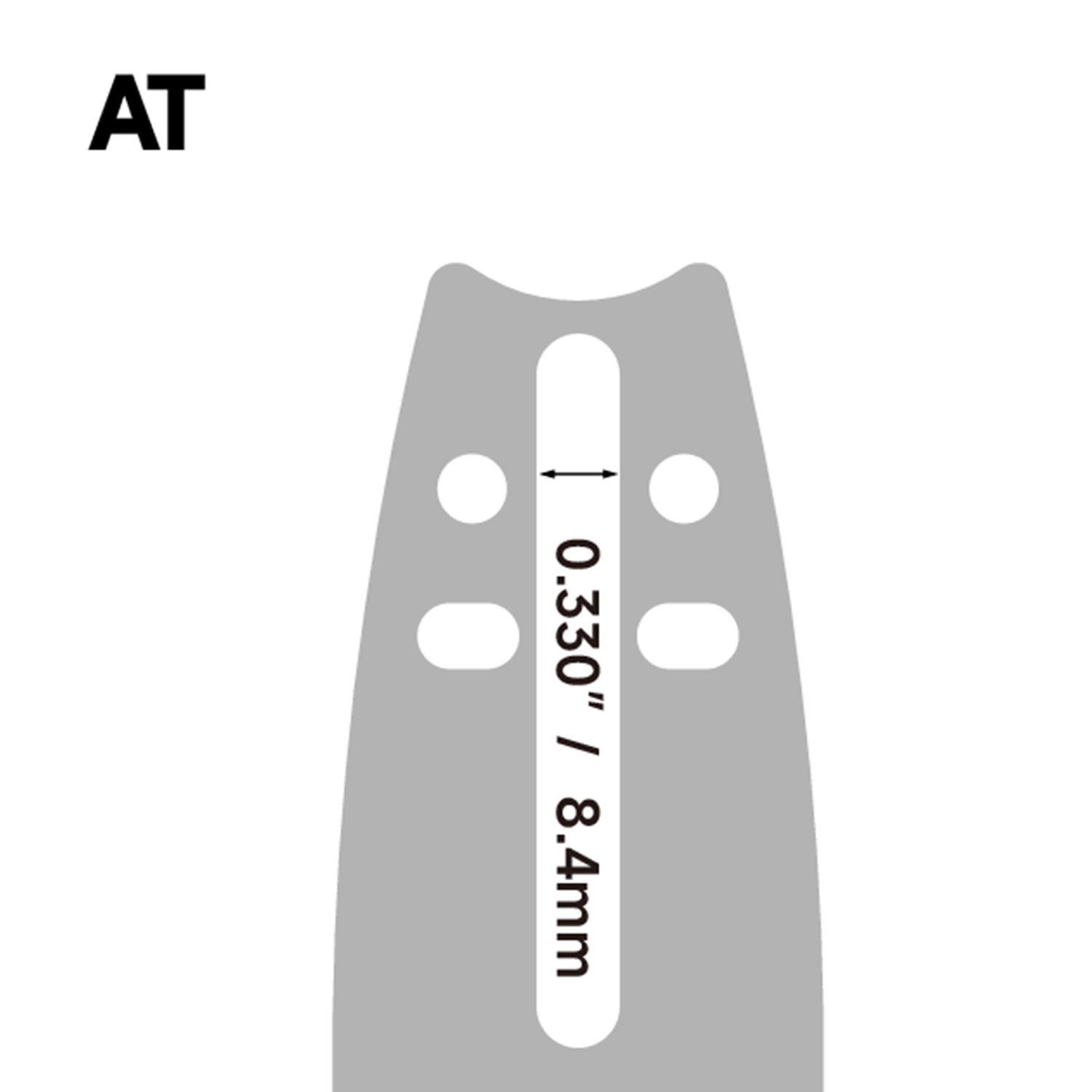
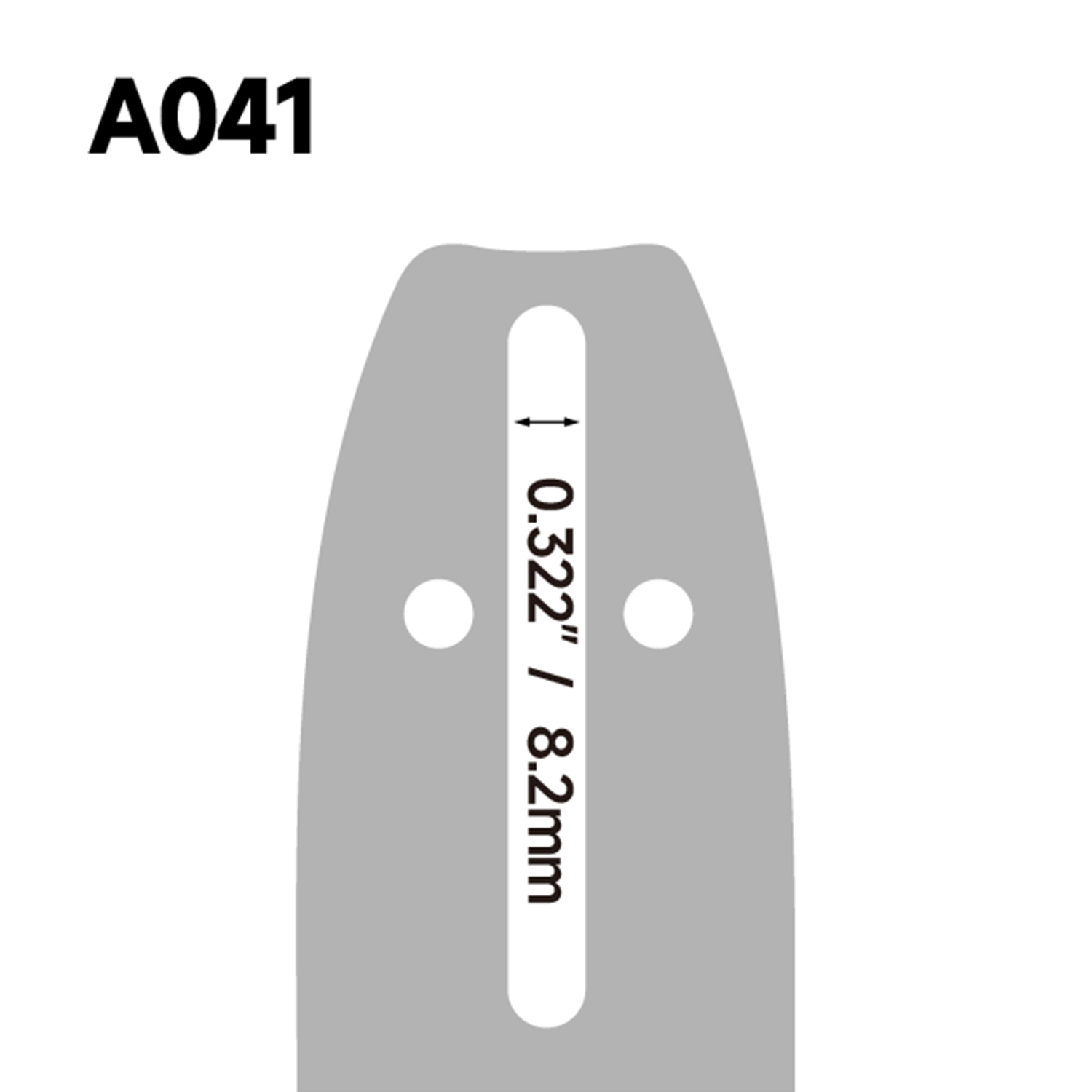
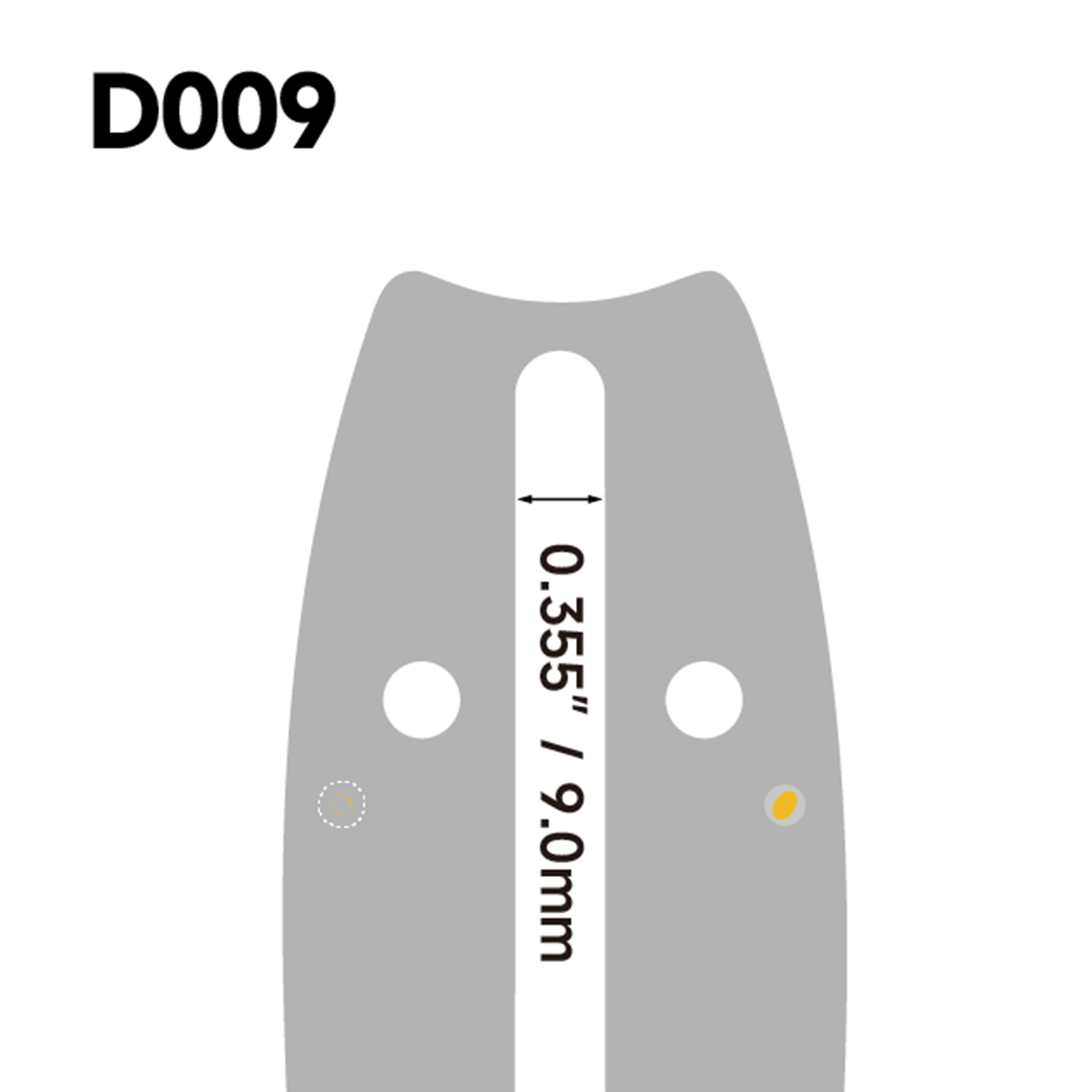
Chain gauge is the thickness of the drive links that ride in the bar groove. Common values are .043, .050, .058, and .063 inch. When the gauge is too large, the drive links bind in the slot; when it is too small, the chain wobbles and may jump off the bar.
Drive Link Count
The drive link count tells you the number of chain segments that actually slide inside the groove. This number determines the loop length. A chain with too many links will drift on the bar; one with too few links will be under too much tension. Both conditions make cutting harder and increase the chance of kickback.
When the Stamped Numbers Are Worn Off
A guide bar that has spent years in the woods often has a smooth patch where the stamping used to be. When the numbers disappear, you can still work out the match with a few simple steps.
- Measure effective cutting length from the bar tip back to the point where the bar meets the saw body.
- Use a caliper to measure the thickness of a drive link on the old chain. That gives you the gauge.
- Place a rule against the bar tail and trace the mounting slot pattern onto paper so you can compare it with a new bar.
- Measure chain pitch from a chain loop: place the chain flat, measure from the center of one rivet to the center of the third rivet, and divide by two.
- Count the drive links on the loop. Lay the chain flat and count every raised link that is designed to ride in the bar groove.
If you have no old chain, the bar alone cannot tell you the drive link count or the exact pitch. In that situation, the saw model number or the original parts list is the most accurate source.
Why Matching the Numbers Matters
A chainsaw bar and chain are a matched set. The chain slides in the bar groove, wraps around the nose, and is driven by the sprocket. If one measurement is off, the whole system works against itself.
A bar with the wrong gauge creates drag or play. A bar with the wrong pitch will not fit the chain drive. A chain with the wrong drive link count may be impossible to tension correctly. Those problems are not just annoyances; they can create unstable cutting and increase kickback risk.
Guide bar design also changes the safety picture. The nose radius, rail shape, and replaceable tip all affect how the chain moves around the nose. Our article on how guide bar design impacts safety and efficiency covers these details in practical terms.
Choosing a Replacement Bar with the Correct Numbers
Once you have the four specifications, you can sort through replacement bar options without relying on the old brand. The construction style is the next thing to consider.
If you spend a lot of time cutting near soil, concrete, or old fencing, a hardnose guide bar has a sealed tip with no sprocket to trap debris. That simple design makes it durable in abrasive conditions.
 Wholesale HARDNOSE GUIDE BAR Suppliers, ExporterAs Wholesale HARDNOSE GUIDE BAR Suppliers and exporter in China, Hangzhou Shenling Technology Co., Ltd offer OEM wholesale HARDNOSE GUIDE...View Product →
For limbing and lighter trimming, the lower weight of a laminated guide bar reduces arm fatigue without sacrificing basic cutting performance. It is a workhorse option for many everyday saws.
 Wholesale LAMINATED GUIDE BAR Suppliers, ExporterAs Wholesale LAMINATED GUIDE BAR Suppliers and exporter in China, Hangzhou Shenling Technology Co., Ltd offer OEM wholesale LAMINATED GUI...View Product →
When your cutting hours are high and the tip takes the most abuse, a replaceable sprocket nose guide bar lets you replace a worn nose sprocket instead of buying an entire bar. That lowers long-term operating cost and keeps chain tension more stable as the tip wears.
 Wholesale REPLACEBLE SPROCKET NOSE GUIDE BAR Suppliers, ExporterAs Wholesale REPLACEBLE SPROCKET NOSE GUIDE BAR Suppliers and exporter in China, Hangzhou Shenling Technology Co., Ltd offer OEM wholesal...View Product →
Treat the stamped numbers on your guide bar as a reference you save before the surface becomes unreadable. Write them down, keep them in the tool log, and use them whenever you order a bar or chain. If the numbers are already gone, measure carefully. A few extra minutes at the bench will prevent a long afternoon of fighting with a chain that was never meant to sit on that bar.

