

 English
 Español

Content
The Quick Answer: How to Measure Chainsaw Bar Length
Chainsaw bar length is measured from the front of the saw's body to the tip of the guide bar — not the total physical length of the bar itself. This is called the "effective cutting length" or "called length," and it's the number you'll see listed in product specs and owner's manuals. For example, a bar with a total physical length of 20 inches may have a cutting length of only 18 inches, because roughly 2 inches are hidden inside the saw's housing.
To measure it yourself, all you need is a tape measure. Place one end at the point where the bar exits the chainsaw body and measure in a straight line to the very tip of the bar. Round to the nearest even number — most bars come in even-inch increments like 14", 16", 18", and 20".
Effective Cutting Length vs. True Bar Length
Understanding the difference between these two measurements prevents costly mistakes when ordering replacement parts or a new guide bar.
Effective Cutting Length (Called Length)
This is the standard measurement used in retail, manuals, and replacement guides. It represents the usable cutting portion of the bar — the part of the chain that actually contacts wood. This is the number to use when buying a replacement bar or chain.
True Bar Length (Physical Length)
This is the full length of the bar from end to end, including the portion mounted inside the saw's housing. It's typically 2 to 4 inches longer than the effective cutting length. You'll need this measurement when checking bar compatibility with a specific chainsaw model or mounting slot.
| Called Length | Typical True Length | Common Use Case |
|---|---|---|
| 14" | 16–17" | Light pruning, small limbs |
| 16" | 18–19" | Firewood, general homeowner use |
| 18" | 20–21" | Medium trees, farm work |
| 20" | 22–24" | Large hardwoods, professional felling |
Step-by-Step: How to Measure Your Chainsaw Bar
Follow these steps for an accurate measurement, whether the chain is on or off the bar:
- Ensure the saw is off and the chain brake is engaged before handling the bar.
- Locate the point where the bar exits the saw body — this is your starting point.
- Extend your tape measure in a straight line along the top of the bar to the very tip.
- Note the measurement in inches and round up to the nearest even number if it falls between sizes (e.g., 17.5" rounds to 18").
- Cross-check with the bar's label or stamp, which is usually on the underside near the mounting end.
If the bar has already been removed, measure from tip to tail for the true length, then subtract the hidden portion (check your owner's manual for this value — typically 2"). That gives you the effective cutting length.
Other Key Chainsaw Guide Bar Specifications You Need
Bar length alone doesn't tell the full story. When replacing or upgrading a guide bar, you also need to match these three specs to ensure compatibility:
Bar Gauge (Groove Width)
The gauge is the width of the groove that runs along the bar's edge, which the chain's drive links ride in. Common gauges are 0.043", 0.050", 0.058", and 0.063". Using the wrong gauge causes the chain to derail or bind. Always confirm the gauge when buying a replacement chain.
Chain Pitch
Pitch is the distance between chain links, measured as half the distance between three consecutive rivets. The most common pitches are ¼", .325", 3/8", and 0.404". The bar's sprocket nose must match the chain's pitch exactly.
Drive Link Count
The number of drive links determines the chain's total length. Two chains with the same pitch and gauge but different link counts will not fit the same bar. Count the drive links (the teeth that sit inside the bar groove) or check your manual before ordering a replacement chain.
Choosing the Right Guide Bar Length for Your Job
Bigger isn't always better. A bar that's too long for your saw's engine reduces cutting efficiency and increases kickback risk. As a general rule, your bar length should not exceed twice the diameter of the wood you're cutting — though staying within the manufacturer's recommended range is the safest approach.
- 12–14" bars: Best for electric or battery-powered saws, light pruning, and branches under 10" in diameter.
- 16–18" bars: The most versatile range for homeowners — handles firewood bucking, storm cleanup, and trees up to 16" across.
- 20–24" bars: Suited for gas-powered saws with 40–60cc engines; used for felling large hardwoods and milling.
- 28"+ bars: Professional forestry and milling work only; requires high-displacement engines (70cc+).
If you're unsure, check your saw's manual for the manufacturer's minimum and maximum recommended bar lengths. Running a bar beyond the maximum can void your warranty and create a genuine safety hazard.
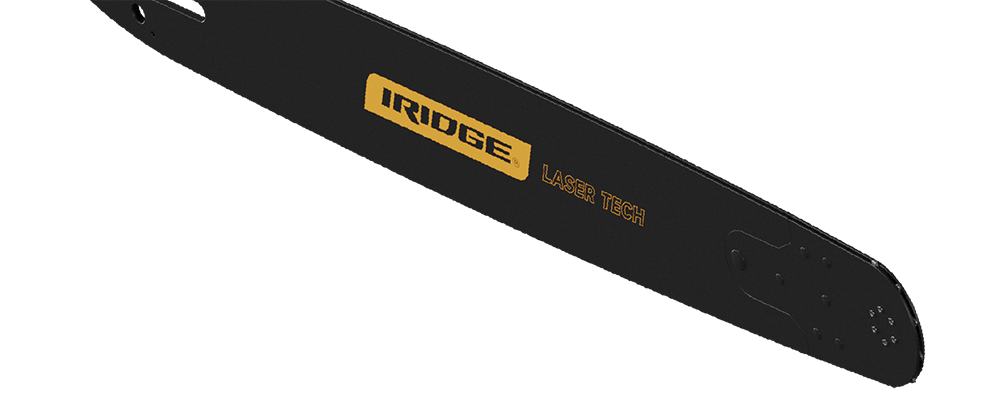
Signs Your Chainsaw Guide Bar Needs Replacing
Even a correctly sized bar won't perform well if it's worn out. Watch for these warning signs:
- Uneven groove wear: If the chain tilts to one side while cutting, the groove walls have worn unevenly.
- Rails that pinch the chain: The bar rails (the two edges of the groove) can close in over time, restricting chain movement.
- Visible bends or burrs: A bent bar causes crooked cuts; burrs accelerate chain wear.
- Persistent overheating: If the bar gets extremely hot quickly even with proper lubrication, the oil hole or groove may be clogged or damaged.
A quality guide bar, with proper maintenance like rotating it 180° at every chain sharpening to equalize wear, can last through two to four chain replacements before needing to be swapped out.

