

 English
 Español

Content
- 1 How to Measure a Chainsaw Bar: The Direct Answer
- 2 Called Length vs. True Length: Why Both Measurements Matter
- 3 The Three Chain Specifications Every Bar Measurement Must Match
- 4 Chainsaw Bar Types and How They Affect Cutting Performance
- 5 Matching Bar Length to Saw Power and Task
- 6 Reading Bar Markings and Finding Replacement Specifications
- 7 Chainsaw Bar Maintenance: Extending Bar Life
How to Measure a Chainsaw Bar: The Direct Answer
To measure a chainsaw bar, measure from the front of the chainsaw body (where the bar enters the housing) to the tip of the bar — this gives you the "called length" or effective cutting length. This is the measurement used when buying replacement bars or chains, and it is almost always rounded to the nearest even inch. A bar that measures 18.5 inches from housing to tip is sold and labeled as an 18-inch bar.
The full physical length of the bar — measured from end to end including the portion that sits inside the housing — is called the "true length" or "mount length." This longer measurement matters when matching bars to specific saw models, because the mounting hole pattern, bar tail length, and mounting slot dimensions must fit the saw's powerhead. A bar with the correct called length but wrong mount configuration will not fit the saw even if the cutting length appears correct.
Called Length vs. True Length: Why Both Measurements Matter
The distinction between called length and true length is the most common source of confusion when buying replacement bars. Understanding both ensures you purchase a bar that both cuts at the right depth and physically fits your saw.
Called Length (Effective Cutting Length)
Called length is measured from the point where the bar exits the chainsaw housing to the furthest tip of the bar nose. This is the working measurement — the actual depth your saw can cut into wood in a single pass. Most consumer chainsaws come with bars ranging from 12 to 20 inches in called length, while professional forestry saws use bars up to 36 inches or longer for felling large timber.
When a manufacturer or retailer lists a chainsaw as a "16-inch saw" or a "20-inch saw," they are referring to this called length. It is also the measurement printed on packaging for replacement chains, which must match the bar's cutting length exactly.
True Length (Full Physical Bar Length)
True length is measured end to end across the entire bar, including the tail section that fits inside the chainsaw housing. This measurement is typically 2 to 4 inches longer than the called length, depending on the saw model and bar design. True length is used by manufacturers to specify exact bar compatibility — two bars with the same called length from different manufacturers may have different true lengths and tail configurations that make them incompatible with the same powerhead.
If you need to source a replacement bar and the original is no longer available, the true length measurement combined with the mounting hole positions and bar slot dimensions allows you to find a compatible cross-reference from another brand.
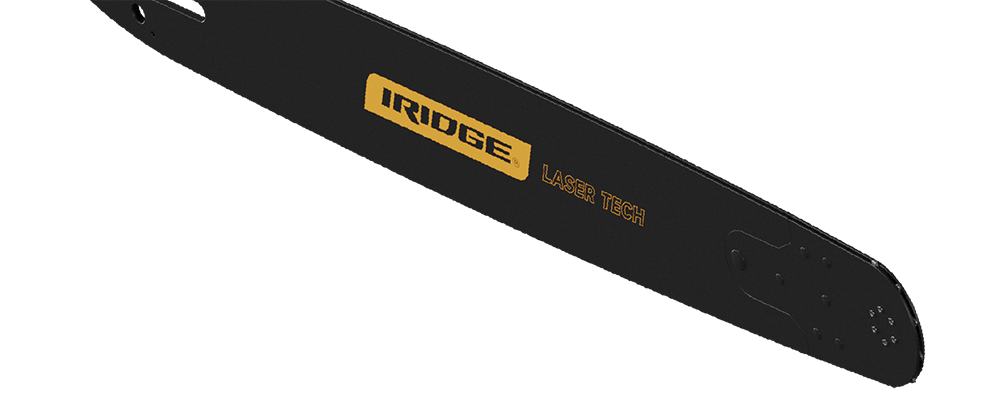
How to Take Both Measurements
- For called length: With the bar attached to the saw, place the end of a tape measure flush against the saw body at the point where the bar emerges from the housing. Extend the tape to the furthest point of the bar nose and read the measurement. Round down to the nearest even inch to get the called length.
- For true length: Remove the bar from the saw. Lay it flat on a workbench and measure from the very end of the tail (the bar heel) to the very tip of the nose. This full end-to-end dimension is the true length.
- For the mounting slot: Measure the length of the elongated slot in the bar tail — this slot allows bar tension adjustment. Note the slot length and the position of any mounting holes relative to the slot, as these dimensions must match the saw's adjustment stud and bar bolt positions.
The Three Chain Specifications Every Bar Measurement Must Match
Bar length alone is not enough to buy the correct replacement chain. Every chainsaw chain is defined by three measurements: pitch, gauge, and drive link count. All three must match both the bar and the saw's drive sprocket for the chain to fit and run safely.
Pitch: The Spacing Between Drive Links
Pitch is measured as half the distance between any three consecutive rivets in the chain. It defines the size of the chain loops and must match the drive sprocket's teeth spacing. The most common pitch sizes are 0.325 inch, 3/8 inch, and 0.404 inch. Note that 0.325 inch and 3/8 inch look similar in print but represent genuinely different dimensions — a 3/8 inch chain will not fit a 0.325 inch sprocket and vice versa.
Consumer saws commonly use 3/8 inch low-profile (often written as 3/8" LP) or 0.325 inch pitch. Professional saws typically use full 3/8 inch or 0.404 inch pitch chains, which are stronger and better suited to high-horsepower cutting but require more powerful saws to drive effectively.
Gauge: The Drive Link Thickness
Gauge is the thickness of the drive links — the teeth at the bottom of the chain that run in the bar groove. The chain gauge must match the bar groove width exactly. Common gauge sizes are 0.043 inch, 0.050 inch, 0.058 inch, and 0.063 inch. A chain with the wrong gauge will either rattle loosely in an oversized groove or bind in an undersized groove — both conditions are dangerous and will cause accelerated wear or chain derailment.
The bar groove width can be measured directly with a feeler gauge or vernier caliper if the original specifications are unknown. Insert the gauge blade into the groove on the bar rail — the thickest blade that slides in without forcing gives the groove width, which corresponds directly to the required chain gauge.
Drive Link Count: Determining Chain Length
Drive link count is the total number of drive links in the complete chain loop. This measurement, combined with pitch, determines the chain's overall length and whether it will fit correctly around a specific bar. The drive link count for a given bar length varies depending on both the pitch and the bar's nose radius, so two 18-inch bars with different pitches require chains with different drive link counts.
Drive link count is printed on most quality chain packaging alongside pitch and gauge. If you are counting manually on an existing chain, count every tooth that protrudes downward from the chain — these are the drive links, and the total gives you the number to specify when ordering a replacement.
| Bar Length (Called) | Common Pitch | Typical Drive Links | Typical Application |
|---|---|---|---|
| 12 inch | 3/8" LP | 44–45 | Compact saws, pruning |
| 14 inch | 3/8" LP | 50–52 | Light firewood, small trees |
| 16 inch | 3/8" LP or 0.325" | 55–57 | Homeowner firewood, medium trees |
| 18 inch | 3/8" or 0.325" | 62–64 | General firewood, felling medium timber |
| 20 inch | 3/8" | 68–72 | Large trees, semi-professional use |
| 24 inch | 3/8" or 0.404" | 84–86 | Professional felling, large timber |
Chainsaw Bar Types and How They Affect Cutting Performance
Not all chainsaw bars are constructed the same way. The bar type affects weight, heat management, cutting speed, and suitability for different tasks. Understanding bar construction helps when selecting a replacement or upgrade.
Solid Bars (Hard-Nose Bars)
Solid bars are milled from a single piece of steel with a fixed, welded nose tip. They are the most durable bar type and resist bending and rail damage better than laminated bars under heavy use. Solid bars are the standard choice for professional forestry work, where the bar is subjected to extreme loads during felling and bucking large timber. Their disadvantage is weight — a solid steel bar is heavier than a laminated equivalent of the same length, adding fatigue over a full working day.
Laminated Bars
Laminated bars are constructed from multiple layers of steel bonded together, often with a hollow center section to reduce weight. The outer rails and nose are hardened steel; the core can include a lighter-weight material or simply an air gap. Laminated bars are significantly lighter than solid bars — a 20-inch laminated bar can weigh 20–30% less than a solid bar of the same length — making them preferred for consumer and semi-professional saws where operator fatigue is a concern. They are adequate for most residential and firewood cutting tasks but may not hold up as well as solid bars under the stress of prolonged commercial use.
Sprocket-Nose Bars vs. Hard-Nose Bars
The nose of the bar — where the chain wraps around the tip — can be either a fixed welded tip (hard nose) or a small roller bearing sprocket (sprocket nose). Sprocket-nose bars reduce friction at the nose significantly, which lowers heat buildup, reduces chain wear, and allows the chain to run faster with less drive power required. Most modern bars use sprocket noses for these efficiency advantages. Hard-nose bars are still used in applications where the nose is at risk of damage — such as cutting near the ground or in rocky conditions — because a damaged sprocket bearing is more problematic than a worn fixed nose tip.
Matching Bar Length to Saw Power and Task
A common mistake is fitting the longest bar a saw can physically accept without considering whether the engine has enough power to drive it efficiently. Running an undersized engine with an oversized bar produces slow cutting, excessive wear, and overheating.
- 30–40cc engine (consumer class): Optimal bar length 12–16 inches. These saws handle light firewood cutting, limbing, and pruning. Fitting an 18-inch bar to a 35cc saw is technically possible but the saw will labor through cuts that a 40cc engine would handle cleanly.
- 40–55cc engine (prosumer class): Optimal bar length 16–20 inches. This range covers most homeowner and semi-professional tasks including medium tree felling and regular firewood production. An 18-inch bar is the most versatile choice in this power class.
- 55–70cc engine (professional class): Optimal bar length 18–24 inches. These saws are designed for sustained hard use felling and bucking larger timber. They can run 20–24 inch bars without laboring and maintain chain speed under load.
- 70cc+ engine (commercial/forestry class): Bar lengths 24–36 inches. Used by professional loggers for large timber, these saws have the torque and cooling capacity to sustain output through long cuts on large-diameter wood.
A practical rule: the bar should be 2 inches longer than the diameter of the wood you most commonly cut. This allows the saw to complete cuts in a single pass without needing to reposition, while keeping the bar length — and therefore the chain perimeter and required drive power — as short as possible for efficient operation.
Reading Bar Markings and Finding Replacement Specifications
Most chainsaw bars have their key specifications stamped or printed directly on the bar body, typically on the flat side near the mounting area. Knowing how to read these markings eliminates guesswork when ordering replacement chains or a new bar.
- Bar length: Usually stated in inches as the called length. May appear as "18P" (18-inch bar) or similar brand-specific notation.
- Pitch: Expressed as a fraction or decimal — ".325", "3/8", ".404".
- Gauge: Expressed as a decimal in inches — ".043", ".050", ".058", ".063". Some bars use millimeter markings in European markets: 1.1mm = .043", 1.3mm = .050", 1.5mm = .058", 1.6mm = .063".
- Drive link count: Some bars stamp this directly; others require the user to refer to a compatibility chart using the bar model number.
- Bar model number: A code unique to the manufacturer that can be cross-referenced against compatibility tables to find matching chains and alternative bar brands. Oregon, Stihl, Husqvarna, and Carlton all publish cross-reference guides online and in print.
If the bar markings are worn or illegible, the three measurements you need are: called length (from housing to tip), gauge (measured with a feeler gauge in the bar groove), and pitch (measured from the chain itself — measure the distance across three consecutive rivets and divide by two). With these three figures, any chain supplier can identify the correct replacement chain regardless of the original bar manufacturer.
Chainsaw Bar Maintenance: Extending Bar Life
A correctly measured and specified bar will wear prematurely if not maintained. Bar wear is one of the most common — and most preventable — causes of poor chainsaw performance.
- Flip the bar regularly. Most bars wear unevenly because the chain tension pulls the bar rail on one side harder than the other during normal cutting. Flipping the bar 180 degrees every few hours of use — or at each chain sharpening — distributes wear evenly across both rails and can double the usable life of the bar.
- Keep the bar groove clean. Sawdust and bar oil residue compact in the groove over time, restricting chain movement and reducing lubrication. Clean the groove with a flat-bladed tool or purpose-made bar groove cleaner at each chain change.
- Check bar rail wear with a straight edge. Lay a straight edge across the bar rails — if one rail is visibly lower than the other, the bar has uneven rail wear. Bars with severely worn or stepped rails can be dressed with a flat file to restore a flat, even rail surface, but there is a limit to how much material can be removed before the groove becomes too shallow for the chain drive links.
- Ensure the oiler is working. The bar oil inlet hole in the bar must align with the saw's oil outlet port. A blocked or misaligned oiler causes the bar and chain to run dry, dramatically accelerating wear on both components. Check that bar oil is flowing to the bar groove before each use by holding the saw over a light surface and revving briefly — a line of oil flung from the bar tip confirms the oiler is working.
- Maintain correct chain tension. A chain that is too loose flaps in the groove, causing accelerated rail and drive link wear. A chain that is too tight causes bearing failure in the sprocket nose and overloads the engine. The correct tension allows the chain to be pulled around the bar by hand with light resistance, with the drive links sitting in the groove but able to be lifted approximately 3–5mm at the mid-point of the bar under light finger pressure.

