

 English
 Español

Standing at the bench with a loose chain in hand is common. The old chain has done its work, the part number is faded, and the guide bar does not show a clear specification. Rather than guessing, you can identify that chain by three measurements: pitch, gauge, and link count. These values also confirm whether the chain matches the sprocket nose and the bar rail.
Content
Start With the Stamped Markings
Every quality chainsaw chain has a number stamped into the drive tooth. That number, usually a two-digit code such as 21, 22, 25, 59, 72, 73, 75, 91, or 95, refers to a specific combination of pitch and gauge. If you can read that number, you do not need to measure anything. Write it down and look up the chain number chart for your brand. If the marking is missing or worn off, then move to physical measurement.
Measure Pitch to Narrow Down the Chain Type
Pitch is the distance between any three consecutive rivets divided by two. In practical terms, it represents the spacing of the drive links. Because chainsaw chains use standard pitch values, you only need to compare the actual distance to a short list of common sizes.
To measure pitch, place a tape measure from the center of one rivet to the center of the third rivet, then divide by two. Alternatively, you can use a pitch gauge to match the chain directly. Common pitch values for chainsaw chains are 3/8 inch LP, .325 inch, 3/8 inch, and .404 inch. Each pitch requires a specific sprocket and guide bar nose, so using the wrong pitch will result in the chain not engaging properly.
| Pitch | Typical Application |
|---|---|
| 3/8" LP | Consumer-grade saws, light trimming |
| .325" | Mid-range all-round saws |
| 3/8" | Professional felling and firewood |
| .404" | Heavy-duty harvesting and milling |
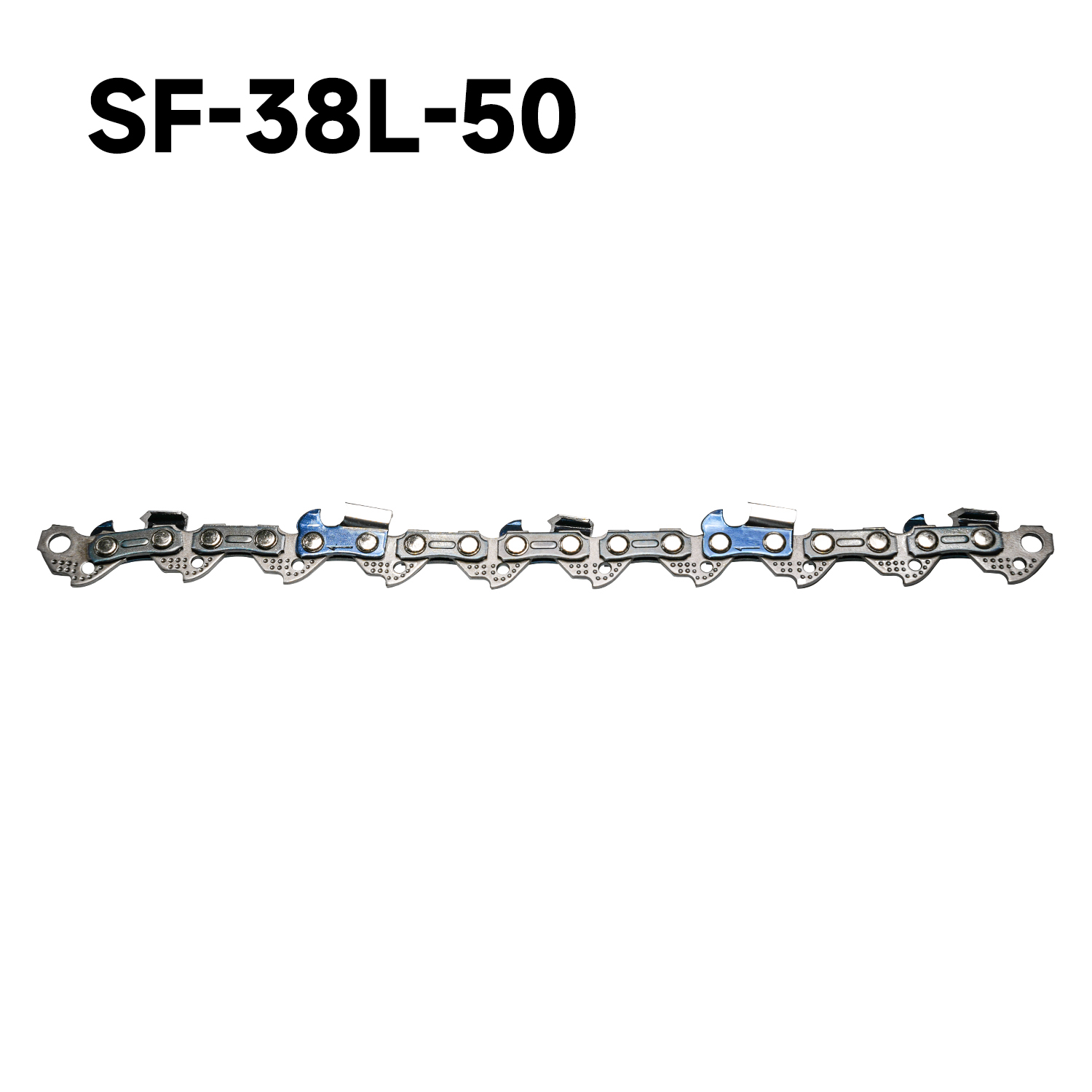 3/8" LP Pitch Chainsaw Chain for Compact SawsThis low-profile chain suits small to mid-size chainsaws, providing smooth cuts and reduced kickback. Its pitch matches common consumer saws, making it a reliable choice for general yard work.View Product →
Measure Gauge for the Drive Link Thickness
Gauge is the thickness of the drive link that sits in the guide bar rail. If the gauge is too thin, the chain will rattle and wear the bar. If the gauge is too thick, the chain will bind and can damage the bar. A gauge difference of even 0.005 inches can change how the chain sits in the bar rail. Common gauges include .043", .050", .058", and .063". A .050" gauge chain is often paired with .325" pitch in mid-size saws, so knowing the gauge also helps confirm the pitch class.
| Gauge | Typical Bar Rail Width | Common Saw Class |
|---|---|---|
| .043" | 1.1 mm | Compact and top-handle saws |
| .050" | 1.3 mm | Consumer and light professional |
| .058" | 1.5 mm | Mid-size and professional saws |
| .063" | 1.6 mm | High-output professional and harvester |
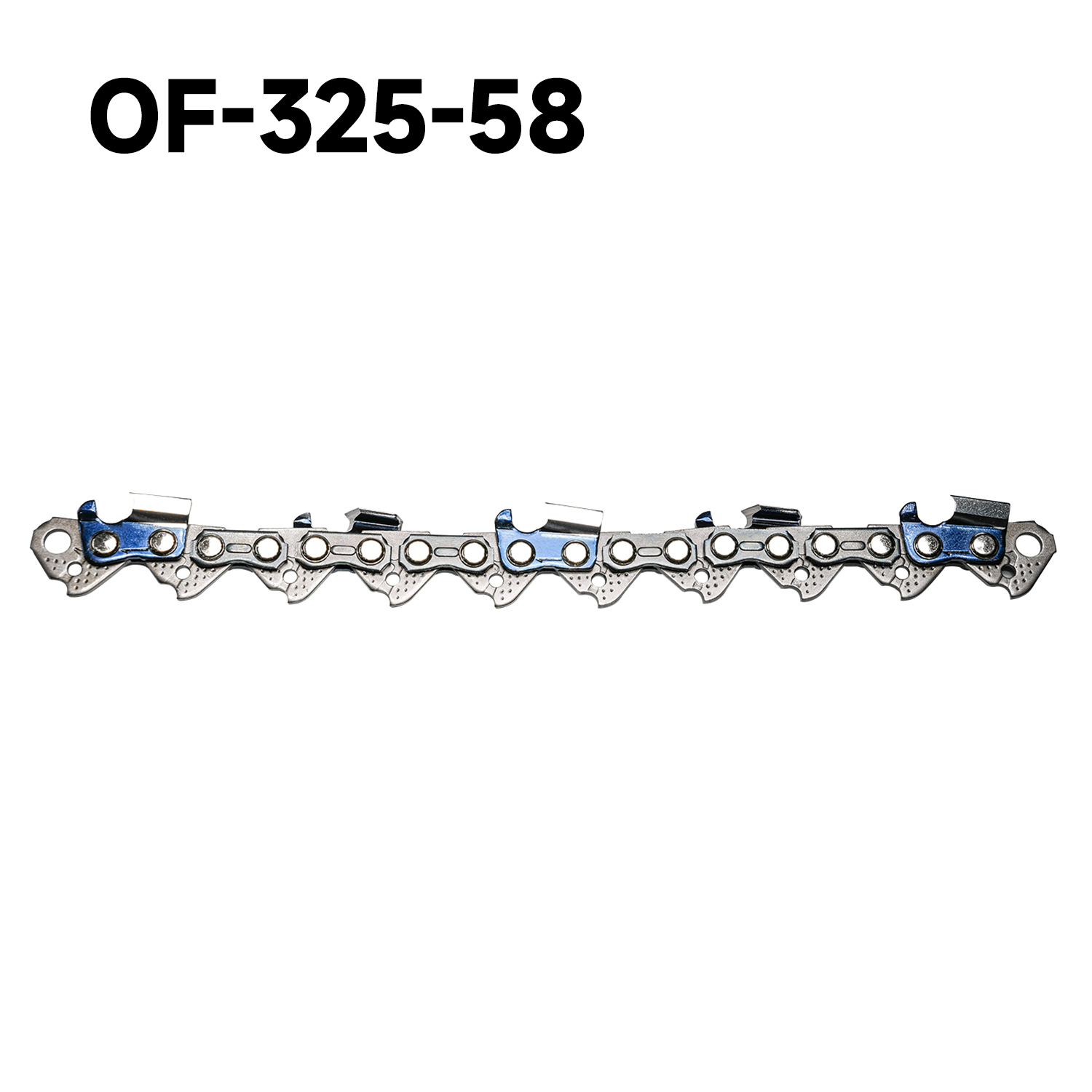 .325" Pitch Chainsaw Chain for Mid-Range Saw ModelsDesigned for mid-size chainsaws, this chain balances cutting speed and power. It pairs well with .050" gauge bars, offering durability and efficient performance for firewood and tree work.View Product →
Count the Links for the Correct Length
The total number of drive links determines the length of the loop. A chain that is too short will not fit around the guide bar. A chain that is too long will not tension properly. Count the drive links on any new chain before installing it, and compare the count to the number printed on your guide bar. If you do not know the target link count, use the guide bar length as a starting point because standard bar lengths correspond to standard link counts.
Matching Chain and Guide Bar Is the Final Step
Even a correctly identified chain will fail if the guide bar is worn or if the sprocket nose has the wrong pitch. The chain and guide bar must share the same pitch and gauge. For example, a 3/8 LP chain requires a 3/8 LP bar and a 3/8 LP sprocket nose. When you select a replacement chain, also inspect the bar for worn rails; a worn bar will make a new chain cut poorly and reduce its service life.
Proper chain tension is equally important. A loose chain can jump off the bar, while an over-tight chain increases friction and accelerates wear on the bar and sprocket. You can read more about how chain tension affects guide bar wear.
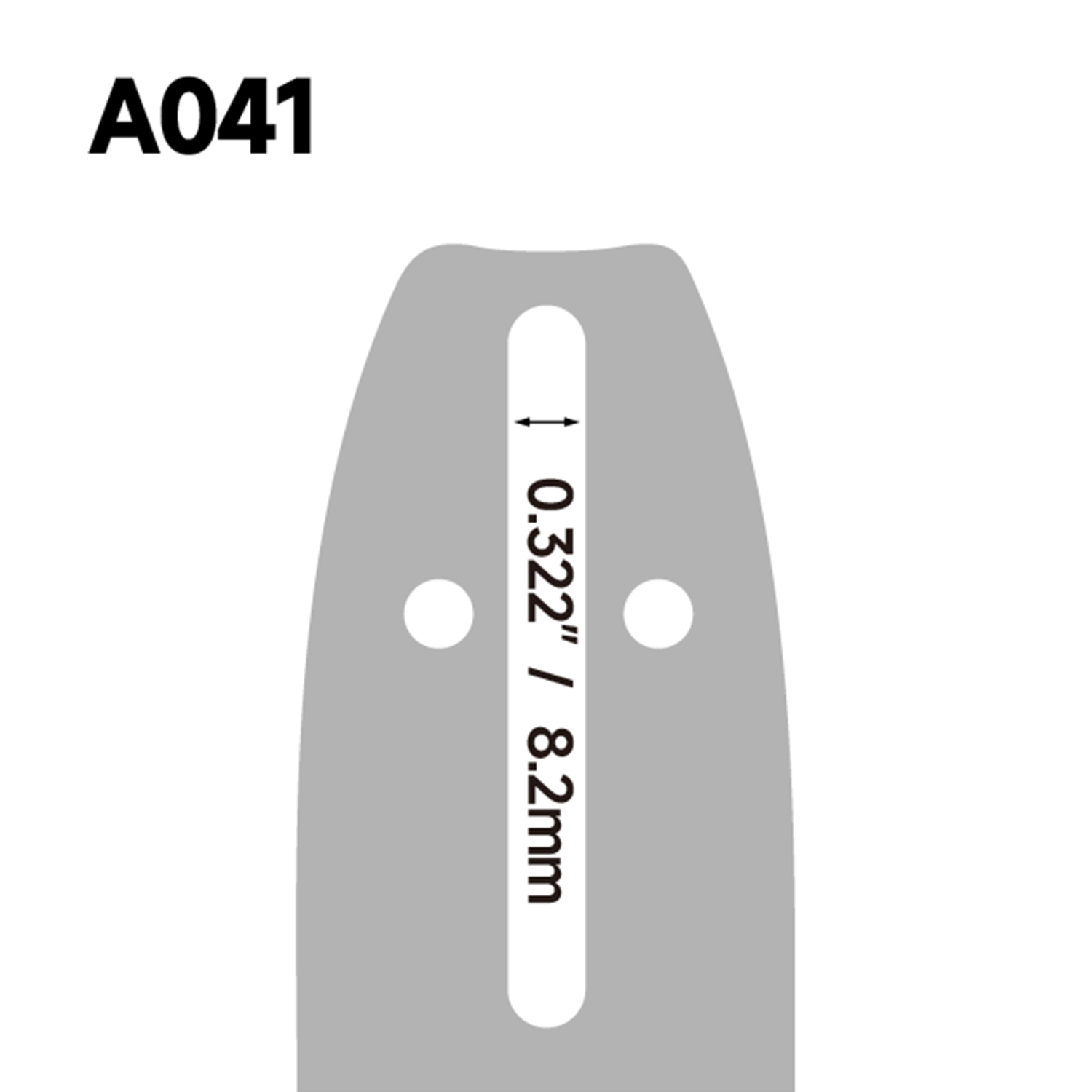 Laminated Guide Bar for Chainsaw Bar ReplacementA laminated guide bar offers reinforced strength and resistance to bending, extending bar life. It fits various chainsaw models and helps maintain stable chain tracking during demanding cuts.View Product →
Procurement Risks of Getting Identification Wrong
Buying chainsaw chain components without accurate identification risks several problems. A wrong pitch can cause the chain to skip teeth or jam in the sprocket. A wrong gauge can cause the chain to overheat or cut crooked. An incorrect link count may leave the chain too short to mount or too loose to tension. These failures often lead to premature bar wear, broken rivets, or operator injury.
In a commercial setting, stocking a single pitch can simplify inventory. If you manage a fleet of saws, standardize on one pitch and gauge class where possible. Register the chain number, pitch, gauge, and link count for each saw in your maintenance log. This reduces downtime and prevents cross-fitting between different machines.
No matter which chain you choose, the identification process remains the same: read the stamp, measure the pitch and gauge, and count the links. These three values will always give you a compatible chain for your guide bar. When in doubt, contact the manufacturer with your stamped chain number and guide bar model.

