

 English
 Español

Content
Why Getting Chain and Bar Specs Right Matters
Installing the correct bar and chain combination on your chainsaw is not just a matter of performance — it is a critical safety requirement. A mismatched chain or an oversized bar can lead to excessive wear on the motor, increased risk of kickback, and potential injury to the operator. Whether you are replacing a worn-out chain or upgrading your guide bar, understanding the exact specifications your saw requires is the first step toward a safe and efficient cut.
Three measurements define a chainsaw chain: pitch, gauge, and drive link count. One measurement defines your bar: cutting length. Together, they determine whether your cutting system will perform reliably — or fail prematurely. This guide walks you through each measurement in plain terms, with practical advice on how to identify, measure, and select the right components for your saw.
Chain Identification: The Three Key Measurements
Before purchasing a replacement chain, you need to identify three specific values. These are often stamped directly onto the guide bar near the body of the saw. If those markings have worn off, you can measure them manually with basic tools.
1. Chain Pitch
Pitch refers to the spacing between the chain's drive links. To measure it, locate three consecutive rivets on the chain and measure the distance between the outermost two from center to center. Divide that figure by two to get the pitch. For example, a three-rivet span of three-quarters of an inch produces a pitch of three-eighths of an inch. The four most common pitch values are:
- 1/4 inch (0.25") — lightweight, low-power saws
- 0.325 inch — mid-range homeowner and prosumer models
- 3/8 inch (0.375") — the most widely used pitch across consumer and professional saws
- 0.404 inch — high-power professional and commercial saws
Using the wrong pitch means the chain will not mesh correctly with the sprocket or the guide bar groove, making the saw unsafe to operate.
2. Drive Link Gauge
The gauge is the thickness of each drive link — the part of the chain that fits into the guide bar's groove. This measurement requires a dial caliper for accuracy, as a standard tape measure will not provide sufficient precision. There are four standard gauge sizes in common use:
| Gauge (inches) | Gauge (mm) | Typical Use |
|---|---|---|
| 0.043" | 1.1 mm | Lightweight, low-power saws |
| 0.050" | 1.3 mm | Most common — homeowner and prosumer models |
| 0.058" | 1.5 mm | Mid-range and professional saws |
| 0.063" | 1.6 mm | Heavy-duty commercial saws |
A quick field method for estimating gauge when no caliper is available: insert a penny, dime, or quarter into the bar groove. A quarter approximates 0.063", a dime fits 0.058", and a penny corresponds to roughly 0.043". This is not a substitute for precise measurement, but it can confirm the approximate size in a pinch.
3. Number of Drive Links
The drive link count determines the total chain length. To count accurately, remove the chain from the bar and lay it flat. Place a piece of tape on the first drive link, then count each link around the full loop. Standard chainsaw chains typically contain between 66 and 72 drive links, though longer bars require higher counts. This figure must match what the bar is rated for; too few links will cause the chain to snap taut, while too many will result in dangerous slack.
If your guide bar still has a legible stamp, the information is displayed in a compact code. For example, a stamp reading "3/8 – 72DL – .050" tells you the pitch is 3/8 inch, there are 72 drive links, and the gauge is 0.050 inches — everything needed to order the correct replacement chain in a single glance.
Chainsaw Bar Lengths: How to Measure and Choose the Right Size
When a chainsaw is sold as a "16-inch" or "20-inch" model, that figure refers to the length of its guide bar — not the entire saw. Selecting the correct bar length affects both cutting capability and operator safety. A bar that is too long for the engine's power output increases torque demand, accelerates motor wear, and raises the risk of kickback.
Two Ways to Measure Bar Length
Cutting length (called length) is the standard measurement used in product descriptions and retail sizing. It is measured from the tip of the bar to the point where it enters the saw body. If this measurement produces a figure like 17.5 inches, round it to the nearest even number — in this case, 18 inches — to find the correct retail size. This is the number used when purchasing a replacement bar.
True bar length is the full end-to-end measurement taken after the bar has been removed from the saw. This is a precise figure that should never be rounded, as it is used for exact OEM replacements and manufacturer cross-referencing. Removing the bar requires loosening the bolts securing the clutch cover; the exact process varies by model.
Matching Bar Length to the Task
A general rule is that the bar should be at least two inches longer than the diameter of the material being cut. The table below summarizes common bar length ranges and their appropriate applications:
| Bar Length Range | Best Suited For | Typical Saw Type |
|---|---|---|
| 10 – 13 inches | Pruning, light trimming, carving | Electric / battery-powered |
| 14 – 16 inches | Limbing, firewood cutting, small trees | Homeowner gas or battery |
| 16 – 18 inches | Felling medium trees, general yard work | Mid-range gas chainsaw |
| 20 inches and above | Large trees, milling, commercial logging | Professional gas chainsaw |
| 30 – 72 inches | Industrial milling, old-growth timber | High-displacement commercial saws |
Always consult your saw's operator manual for the manufacturer-specified maximum bar length. Exceeding this limit voids warranties, reduces motor lifespan, and increases the chance of a dangerous kickback event.
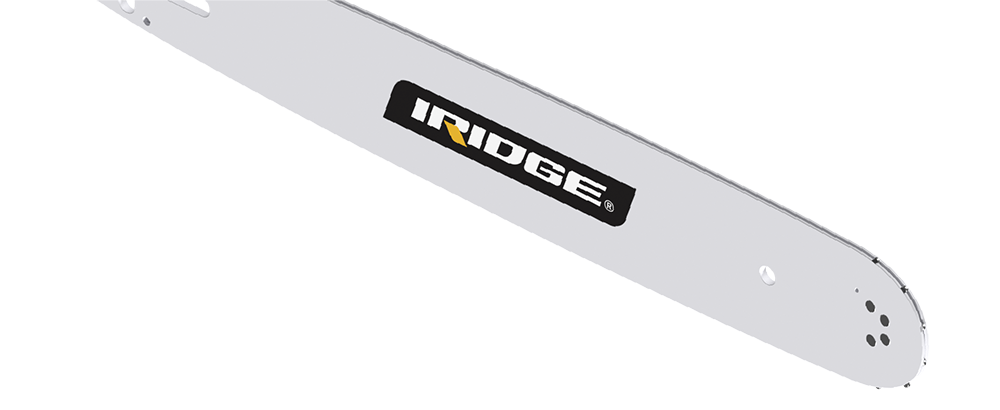
Types of Bars for Chainsaws: Choosing the Right Guide Bar
Not all guide bars are built the same. The construction of the bar determines its weight, durability, flexibility, and suitability for different cutting styles. Understanding the main bar types allows you to select a replacement — or an upgrade — that genuinely matches how you use your saw.
Solid Guide Bars
Solid bars are machined from a single piece of hardened steel. They are the most durable option and are built to withstand the demands of professional and commercial use. Their rigidity offers excellent stability during long, straight cuts into dense timber. The trade-off is weight — solid bars are heavier than laminated alternatives, which increases operator fatigue over extended use.
Laminated Guide Bars
Laminated bars are constructed from multiple layers of steel welded together, with a hollow or semi-hollow internal structure. This design reduces overall weight while maintaining adequate strength for homeowner and semi-professional tasks. They are a practical choice for users who prioritize reduced fatigue over maximum longevity. However, they are not recommended for sustained high-load cutting, where a solid bar will outlast them considerably.
Solid Bars with Replaceable Sprocket Nose
These bars feature a hardened steel body combined with a riveted sprocket nose at the tip. The sprocket reduces friction as the chain rounds the tip, improving chain speed and reducing heat buildup. When the nose sprocket wears out, it can be replaced independently, extending the overall lifespan of the bar. This type is standard on many professional-grade saws and is generally considered the best balance of performance and serviceability.
Carving Bars
Carving bars are a specialist category designed for high-precision work such as chainsaw sculpture, tree surgery, and detailed pruning. They feature a narrower nose radius compared to standard bars, which minimizes the risk of kickback and improves control during boring cuts. Carving bars are typically shorter — often under 14 inches — and are usually made from stellite-tipped steel for extended wear resistance at the nose.
Reading the Bar Identification Code
Every guide bar carries a stamped identification code that encodes compatibility information. A code such as "S2050K095" breaks down as follows: the leading letter indicates the brand mount (in this case, a Stihl-compatible mount), the next two digits show bar length in inches, the following two digits represent gauge in thousandths of an inch, and the final alphanumeric segment references the sprocket nose type and other design specifications. Knowing how to read this code allows you to verify bar compatibility at a glance, without needing to cross-reference a separate catalog.
A Practical Reference: Matching Chain to Bar
All three chain measurements — pitch, gauge, and drive link count — must align with the specifications of your guide bar. Getting just one of these wrong will result in poor performance at best and a dangerous failure at worst. The following table provides a quick-reference overview of common bar lengths, their typical pitch and gauge pairings, and the approximate drive link counts you can expect:
| Bar Length | Common Pitch | Common Gauge | Approx. Drive Links |
|---|---|---|---|
| 12" | 3/8" LP or 0.325" | 0.043" / 0.050" | 44 – 52 |
| 16" | 3/8" or 0.325" | 0.050" / 0.058" | 56 – 60 |
| 18" | 3/8" | 0.050" / 0.058" | 62 – 68 |
| 20" | 3/8" or 0.404" | 0.058" / 0.063" | 72 – 78 |
| 24" and above | 0.404" | 0.063" | 84+ |
When in doubt, the most reliable source of chain and bar specifications remains the operator's manual for your specific saw model. Manufacturer websites for major brands also provide searchable parts databases that allow you to look up correct replacements by model number. If the manual has been lost and the bar stamp is no longer legible, use a caliper for gauge, a tape measure for pitch, and a careful hand-count for drive links — the three measurements will give you everything you need to source the right replacement with confidence.

