

 English
 Español

Content
- 1 How to Measure Chainsaw Bar Length: The Quick Answer
- 2 Step-by-Step: How to Measure Bar Length on a Chainsaw
- 3 Effective Length vs. True Length: Why Both Numbers Exist
- 4 Chainsaw Bar Sizes: Common Lengths and Their Best Uses
- 5 Types of Chainsaw Bars and Their Structural Differences
- 6 Key Bar Specifications Beyond Length
- 7 How to Find Bar Specs Without Measuring
- 8 Chainsaw Bar Maintenance: Extending Bar Life
How to Measure Chainsaw Bar Length: The Quick Answer
Chainsaw bar length is measured in two ways: effective (called) length and true (actual) length. For replacement and general reference purposes, you measure the effective length—from the front of the chainsaw body where the bar exits to the tip of the bar. This is the number you see on packaging and product listings, always rounded to the nearest even inch.
For example, a bar with a true length of 18.5 inches is sold and labeled as an 18-inch bar. When purchasing a replacement bar or chain, always use the effective length. When ordering manufacturer parts or looking up compatibility specifications, you may need the true length, which you measure from tip to the very end of the bar's tail (including the mounting section that sits inside the saw).
Step-by-Step: How to Measure Bar Length on a Chainsaw
You do not need to remove the bar from the saw to get the effective length measurement. Follow these steps for an accurate result:
- Turn off the chainsaw and engage the chain brake. Safety first—ensure the engine is off and the chain is locked before handling.
- Place a tape measure at the point where the bar exits the chainsaw housing. This is the front edge of the body casing, not the tip of the guide bar nose.
- Extend the tape to the very tip of the bar (the nose of the guide bar), keeping the tape parallel to the bar's cutting edge.
- Record the measurement in inches. Round down to the nearest even inch—this is your effective bar length.
- To get the true length, remove the bar from the saw and measure from the very tip to the far end of the mounting tail. Note this number separately for parts ordering purposes.
As a practical example: if your tape reads 20.3 inches from the housing to the tip, your effective bar length is 20 inches—and that is the size chain and replacement bar you should purchase.
Effective Length vs. True Length: Why Both Numbers Exist
The difference between effective and true bar length confuses many chainsaw owners, especially when ordering replacement parts. Here is a clear breakdown:
| Measurement Type | What It Measures | When to Use It | Example |
|---|---|---|---|
| Effective (called) length | Housing front to bar tip | Buying chains, replacement bars, general reference | 18 inches (rounded) |
| True (actual) length | Full bar tip to tail end | Manufacturer parts lookup, OEM specifications | 20.5 inches (exact) |
The tail section of the bar—the portion hidden inside the saw body—varies by manufacturer and model. Two bars that are both labeled "18 inches" (effective) may have true lengths of 19.75 inches and 21 inches respectively. Never use true length alone when buying a replacement chain—chain drive link count and pitch are what determine chain fit, and those are tied to the effective bar length.
Chainsaw Bar Sizes: Common Lengths and Their Best Uses
Chainsaw bars are available in sizes ranging from 6 inches (pole pruning saws) to over 36 inches (professional milling and large timber saws). Matching bar length to the task is critical for both efficiency and safety. Using a bar that is too long for a given saw's engine reduces cutting speed and accelerates wear; using one that is too short limits your cutting capacity unnecessarily.
| Bar Length | Engine Size (cc) | Best Applications | User Level |
|---|---|---|---|
| 6–10 inches | Electric / battery | Pruning, light limbing, small branches | Homeowner |
| 12–14 inches | 30–40 cc | Limbing, small tree felling, yard cleanup | Homeowner |
| 16–18 inches | 40–50 cc | Felling trees up to 14–16" diameter, firewood | Homeowner / semi-pro |
| 20–24 inches | 50–70 cc | Large tree felling, storm cleanup, logging | Semi-pro / professional |
| 28–36+ inches | 70–120+ cc | Large timber, milling, hardwood harvesting | Professional |
A commonly cited rule of thumb is that your bar should be at least 2 inches longer than the diameter of the wood you intend to cut. This allows you to cut through in a single pass rather than repositioning the saw, which increases both efficiency and safety. For example, to fell a 14-inch diameter tree, a 16-inch bar is the practical minimum.
Types of Chainsaw Bars and Their Structural Differences
Not all chainsaw bars are built the same. The bar type affects weight, heat dissipation, durability, and suitability for specific cutting tasks. Understanding the main types helps when selecting a replacement or upgrade.
Solid (Hard Nose) Bars
Solid bars are made from a single piece of steel with a hardened nose. They are extremely durable and resistant to damage from rocks, dirt, and abrasive cutting conditions. Professional loggers and arborists frequently prefer solid bars for demanding work in rough terrain. The trade-off is weight—solid bars are heavier than other types, which increases fatigue during extended use. They are not designed to run sprocket nose replacements and must be replaced entirely when the nose wears out.
Sprocket Nose Bars
Sprocket nose bars feature a small rotating sprocket at the bar tip that the chain rides around. This design reduces friction significantly, which lowers heat buildup and extends chain life. Most consumer and prosumer chainsaws ship with sprocket nose bars as standard equipment. The sprocket bearing can wear out and—on some bar models—can be replaced independently, which is more economical than replacing the full bar.
Laminated Bars
Laminated bars are constructed from multiple layers of steel bonded together, with a softer steel core sandwiched between harder outer plates. This layered construction makes them lighter than solid bars while maintaining reasonable durability. They are the most common bar type in homeowner-grade chainsaws and are well suited to occasional-use cutting tasks such as firewood processing and basic land clearing.
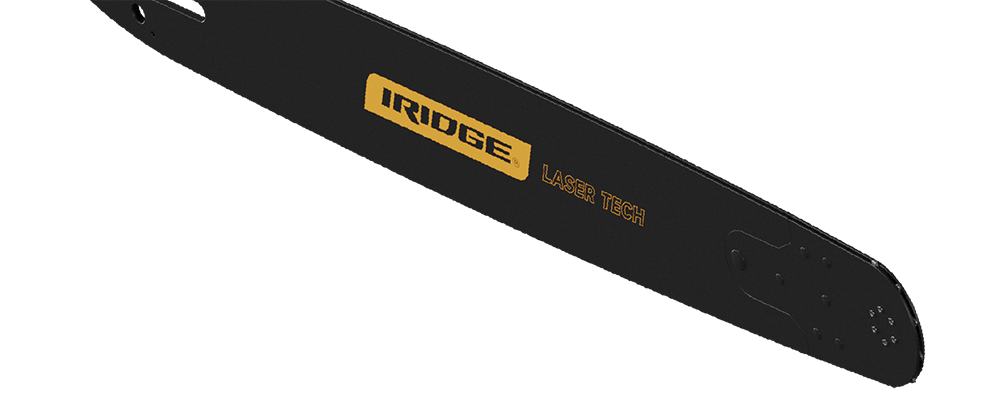
Safety (Narrow Kerf) Bars
Safety bars have a narrow, rounded nose designed to reduce the kickback zone—the upper quarter of the bar tip where most chainsaw kickback events originate. They are recommended for beginner users and for saws used in confined or overhead cutting positions. The reduced cutting surface at the nose comes with a trade-off: less versatility for plunge cuts and tip work.
Key Bar Specifications Beyond Length
Bar length alone is not enough information to buy a compatible replacement bar or chain. Three additional specifications must match your saw and chain:
Chain Pitch
Pitch is the distance between any three consecutive rivets on the chain, divided by two. Common pitch values are 0.325 inch, 3/8 inch, and 0.404 inch. The bar's nose sprocket and the drive sprocket on the saw must both match the chain's pitch. Mixing pitches will cause immediate mechanical failure.
Drive Link Count
Drive links are the teeth on the underside of the chain that ride inside the bar groove. The total number of drive links determines chain length and must match the bar. Two bars of the same effective length can require different drive link counts if their nose radius or groove geometry differs. Always verify the drive link count when ordering a chain—it is printed on the original chain packaging or stamped on the bar itself.
Gauge (Groove Width)
Gauge refers to the width of the bar groove, which must match the thickness of the chain's drive links. The most common gauge sizes are 0.043 inch, 0.050 inch, 0.058 inch, and 0.063 inch. Installing a chain with the wrong gauge on a bar causes either excessive play (too narrow groove) or an inability to seat the chain at all (too wide drive links). Check your saw's manual or the markings stamped into the bar to confirm gauge.
How to Find Bar Specs Without Measuring
If the bar is damaged or the markings are worn, there are several reliable ways to find your bar's specifications without manually measuring every dimension:
- Check the bar itself: Most bars have the pitch, gauge, and drive link count stamped or laser-etched into the flat side of the bar near the mounting area.
- Check the original chain packaging: Chain boxes list pitch, gauge, and drive link count explicitly—keep this packaging for future reference.
- Use your saw's model number: Enter the model number on the manufacturer's website or a parts lookup tool (such as Stihl's or Husqvarna's online parts finder) to get the exact bar and chain specifications for your saw from the factory.
- Count drive links directly: Lay the chain flat on a surface and count every drive link around the full loop. This count, combined with the pitch, uniquely identifies the correct replacement chain.
Chainsaw Bar Maintenance: Extending Bar Life
A quality chainsaw bar can last for many years with proper maintenance. Neglecting basic bar care is one of the most common reasons for premature wear, uneven cutting, and increased kickback risk.
- Flip the bar regularly. Rotate the bar 180° every time you sharpen the chain. This distributes rail wear evenly across both sides of the groove, effectively doubling bar lifespan. Most professional operators flip their bars after every 5–10 hours of use.
- Clean the bar groove. Pack the groove with sawdust, sap, and debris during heavy use. Use a bar groove cleaning tool or a flat screwdriver to clear this buildup after each session. A clogged groove restricts chain movement and accelerates wear.
- Check and clear the oiling holes. The small oil inlet holes on the bar must remain unobstructed for the chain oiling system to function. Use a thin wire or compressed air to clear them when cleaning the bar.
- Inspect the rails for wear. If the bar rails have become uneven—one side visibly lower than the other—the bar will pull the chain to one side during cutting. Rails can be dressed with a bar dressing file to restore a flat, even surface, but severely worn bars should be replaced.
- Store with the bar covered. Use a bar scabbard or cover when transporting or storing the saw to protect the bar rail edges and the chain from impact damage and corrosion.

