

 English
 Español

Why Measuring Your Chainsaw Bar Is a Safety and Performance Issue
A chainsaw guide bar that is incorrectly sized for its saw creates conditions that no amount of operator skill can fully compensate for. A bar that is too long for the engine's output overloads the powerhead, reduces chain speed under load, and increases the probability of kickback—one of the leading causes of serious chainsaw injuries in both professional forestry and residential use. A bar that is too short limits cutting capacity in ways that force operators into inefficient body positions and multiple passes through material that should be cut in one. Neither scenario is acceptable, and both trace directly back to one avoidable error: measuring the bar incorrectly.
OSHA's chainsaw safety requirements under 29 CFR 1910.266—which govern the use of chainsaws in logging and general industry—establish that the chain must be properly matched to the guide bar and the saw, and that equipment must be inspected and maintained to manufacturer specifications before each use. the full OSHA chainsaw parts and compliance requirements make clear that bar and chain compatibility is a regulatory matter, not just a performance preference. Correct measurement is the foundation of that compatibility. Understanding what chainsaw guide bar specifications and compatible formats look like in practice begins with knowing exactly how the bar is measured—and why the method matters as much as the result.
Content
Called Length vs. True Length: The Core Distinction
The single most common source of error in chainsaw bar measurement is confusing two figures that are related but not the same: the bar's physical length and its called length.
The physical length—sometimes called the true length or overall length—is the total measurement of the bar from its mounting tail to the tip of the nose. This includes the portion of the bar that sits inside the saw's housing, concealed by the side cover plate. The physical length is relevant to the bar's structural design and to how it mounts on the powerhead, but it is not the figure used to specify replacement bars or matching chains.
The called length—also referred to as the effective cutting length or usable cutting length—is the distance from the point where the bar exits the front of the chainsaw's body to the tip of the nose. This is the portion of the bar that actually contacts wood during cutting. It determines the maximum diameter of material you can cut in a single pass and is the specification listed in product catalogs, owner's manuals, and chain compatibility charts. A bar with a physical length of 20 inches may have a called length of only 18 inches, because approximately 2 inches are recessed into the housing. Ordering a replacement based on the physical measurement would result in receiving the wrong bar.
All chainsaw bars are sold in standardized called lengths using even-inch increments: 12, 14, 16, 18, 20, 24, 28, 32 inches and beyond for professional and harvesting equipment. Odd-inch measurements do not correspond to any standard product. If your tape measure reads 17.5 inches of effective cutting length, the correct specification is an 18-inch bar. The market rounds to the nearest even number, and replacement bars are specified accordingly. how guide bar design affects chainsaw safety and efficiency provides additional context on how this standardization connects to the broader engineering of the cutting system.
How to Measure a Chainsaw Bar: Step-by-Step
Measuring the called length of a chainsaw bar requires only a tape measure and takes under two minutes. The process is the same whether the bar is mounted on the saw or removed for inspection.
Step 1: Identify the starting point. The measurement begins at the front edge of the chainsaw's body—specifically, the point where the guide bar visibly exits the powerhead casing. Do not begin at the mounting hardware, the bar studs, or the side cover plate. The front face of the casing where the bar emerges is the consistent, reproducible starting point that all manufacturers and aftermarket suppliers use when specifying called length.
Step 2: Extend the tape to the bar tip. Run the tape measure in a straight line along the center of the bar from the starting point to the outermost tip of the bar's nose. Keep the tape parallel to the bar's long axis without following the curve of the nose itself. The measurement should run to the very tip of the bar—the furthest point of the sprocket nose or hard nose depending on bar type.
Step 3: Read and round the measurement. Note the measurement in inches. If the figure falls between even-inch increments—for example, 15.75 inches or 17.3 inches—round up to the next even number. A measurement of 15.75 rounds to 16 inches; 17.3 rounds to 18 inches. This rounding convention is universal across bar manufacturers and chain suppliers.
Step 4: Cross-reference with the bar marking. Most bars carry a manufacturer's stamp or etched marking near the mounting end that states the called length, pitch compatibility, gauge, and sometimes the drive link count. If the stamp is legible, compare it to your measured figure as a verification step. On bars that have been in service for several years, these markings can wear or corrode to the point of illegibility, making the tape measure method the primary reference.
If the bar is not accessible: Check the chainsaw's owner's manual or the manufacturer's specification plate on the powerhead. Most manuals list the bar length as-supplied and the range of called lengths the powerhead is approved to run. This range—the manufacturer's minimum and maximum bar length—also tells you whether a longer or shorter replacement bar is compatible with the saw's engine output and chain brake geometry.
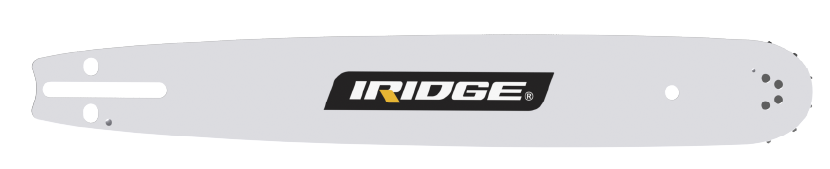
What the Measurement Unlocks: Selecting the Right Chain
The called length alone is not sufficient to specify a replacement chain. Three additional parameters define chain compatibility, and all three must match the bar and saw specifications simultaneously for the chain to fit and operate correctly.
Pitch is the distance between alternate drive links, measured from the center of one rivet to the center of the rivet two positions away, divided by two. Common pitch specifications include 3/8-inch LP (low profile), .325-inch, 3/8-inch standard, and .404-inch. Pitch must match the drive sprocket on the powerhead—a chain with the wrong pitch will not engage the sprocket correctly and cannot be installed safely. types of chainsaws and saw chains explained covers how pitch interacts with saw class and intended application. For professional-grade saws and demanding cutting tasks, 3/8-inch pitch chainsaw chain for professional applications is the most widely specified option across commercial forestry equipment. For mid-range and homeowner-grade saws where reduced kickback and lighter weight are priorities, .325-pitch chainsaw chain for mid-range saw configurations serves the majority of applications in that class.
Gauge is the width of the drive links—the measurement that determines whether the chain fits into the bar's groove. Common gauge specifications are .043-inch, .050-inch, .058-inch, and .063-inch. A chain with a gauge that is too wide will not fit into the groove; one that is too narrow will rattle and derail. Gauge is stamped on the bar and listed in the powerhead manual alongside the pitch specification.
Drive link count is the total number of drive links on the chain, which determines the chain's overall length and how tightly it wraps the bar and sprocket. Drive links are counted manually on the existing chain or looked up in the bar's specification documentation. For a given called length, the drive link count varies by pitch—a 16-inch bar running .325-pitch chain requires a different drive link count than the same bar running 3/8-inch chain. All three parameters—pitch, gauge, drive link count—must be specified correctly to source a replacement chain that installs and operates as designed.
How Bar Type Affects Measurement and Replacement Decisions
Not all guide bars are structurally identical, and the type of bar affects both how the nose measurement is taken and what replacement options are available when the bar reaches end of service life.
Hardnose guide bars have a solid steel nose with no moving parts. The tip of the bar is a fixed, solid surface that the chain rides around. hardnose guide bar for heavy-duty cutting applications is the standard specification for professional felling, bucking, and milling work where durability under sustained load is the primary requirement. Measurement is straightforward—the tip is a fixed point, and the tape measure reads directly to it. When a hardnose bar wears beyond service limits, the entire bar is replaced as a unit.
Replaceable sprocket nose guide bars have a bearing-mounted sprocket wheel at the tip that rotates with the chain, reducing friction and heat at the nose. This design extends chain life and improves cutting efficiency in production environments. replaceable sprocket nose guide bar for extended service life allows the sprocket assembly to be replaced independently of the bar body when the bearing wears out—a significant cost advantage in high-volume cutting operations. When measuring this bar type, the tape extends to the tip of the sprocket nose, not the body of the bar behind it. The replacement sprocket nose for guide bar maintenance is specified separately by bar model and pitch, allowing nose replacement without retiring the entire bar.
Laminated guide bars are constructed from multiple layers of bonded steel rather than a single solid billet, which reduces weight while maintaining structural integrity across the bar's usable length. laminated guide bar for lightweight and flexible performance is commonly specified for climbing arborists, overhead cutting operations, and applications where operator fatigue is a limiting factor. Measurement follows the same called-length convention as solid bars. The layered construction can show delamination as a wear indicator—separation of the bonded layers is a definitive replacement signal regardless of measured length.
Wear Indicators: When to Replace Rather Than Just Remeasure
Measuring a bar's called length answers the question of what size it is. A separate set of physical checks answers the equally important question of whether it is still serviceable. A bar that measures correctly but has degraded beyond safe operating condition is not a usable bar—and continuing to run it creates risks that measurement alone cannot identify.
Groove wear and rail condition. The groove that runs along both rails of the guide bar is the channel through which the drive links travel. Over time, the groove widens and the rail walls wear down, allowing the chain to tilt laterally rather than running true. A chain that tilts visibly when cutting—producing angled cuts rather than perpendicular ones—indicates uneven rail wear. Rail walls that have closed inward, pinching the drive links and restricting chain movement, indicate compression damage from repeated impact or improper tension. how chain tension affects guide bar wear resistance examines how tension management directly extends or shortens rail service life.
Visible bends, burrs, and deformation. A bar that has been used to lever cut material, dropped onto hard surfaces, or run against embedded metal will often show visible bending along its length or burring at the rails. A bent bar produces crooked cuts even with a properly sharpened chain and correct tension. Rail burrs accelerate chain wear and can cause the chain to derail under load. Both conditions are grounds for immediate replacement rather than continued service.
Persistent overheating. A bar that runs hot quickly despite adequate chain oil supply and correct chain tension may have a blocked oil port or a damaged oil groove that prevents lubricant from reaching the rail surface. The oil port is the small hole near the mounting end of the bar through which the saw's automatic oiler delivers bar oil to the groove. Blockage can sometimes be cleared with a wire probe; if the port and groove are clear but overheating persists, the rail surface itself may be damaged beyond the point where lubrication is effective.
Rotation as a maintenance practice. A guide bar that is still within serviceable limits can have its working life extended by rotating it 180 degrees at every chain sharpening interval. Because most cutting applies load to the bottom rail—the side closest to the ground during normal felling cuts—rotating the bar brings the less-worn top rail into the primary cutting position, equalizing wear across both surfaces. A quality bar maintained with regular rotation and correct tension can outlast two to four chains before requiring replacement. safety issues related to chainsaw chain wear covers the chain-side indicators that accompany bar degradation and should be assessed at the same time as bar inspection.
Measuring a chainsaw bar correctly is a two-minute task with consequences that extend across the full service life of the cutting system. The called length determines chain compatibility. The bar type determines replacement options. And the wear inspection determines whether measurement is the right intervention or whether replacement is the only safe path forward. Each of these steps takes less time than the problems they prevent.

