

 English
 Español

Content
Why Getting the Bar Length Right Matters
Ordering a replacement guide bar or chain by guesswork is a good way to end up with something that doesn't fit — or worse, fits poorly enough to create a hazard. Bar length determines which chain pitch, gauge, and drive link count you need, and a mismatch anywhere in that chain of specs can throw off tension, wear patterns, and how the saw handles under load.
The good news is that measuring a bar correctly takes a few minutes and doesn't require any special tools beyond a tape measure. There are three ways to get there, and knowing all three means you're never stuck if one option isn't available. How guide bar design affects overall chainsaw safety and efficiency starts with this basic step — getting the size right before anything else.
Method 1: Measure the Bar Directly
Lay the chainsaw on a flat, stable surface with the bar fully extended. Run a tape measure from the outermost tip of the bar to the point where it disappears into the saw's body — not to the very back of the bar, but to where the housing meets it.
That raw number rarely lands on a clean figure. Round it up to the nearest even number; a measurement of 17½ inches becomes an 18-inch bar. This rounded figure is what's known as the "called length" or "cutting length" — the size manufacturers use when labeling and selling bars.
Method 2: Check the Bar Tail Stamp
Before reaching for the tape measure, look at the tail end of the bar, near where it bolts to the saw. Most manufacturers stamp the length directly into the metal here, sometimes alongside the pitch and gauge.
This is the fastest method when it works, and it's worth checking first since it skips the rounding step entirely. Wear, rust, or a worn stamp can make this hard to read on an older bar, which is when you'll want to fall back on direct measurement instead.
No Stamp, No Tape Measure? Count the Drive Links
If neither of the above options works, the chain itself can tell you what you need to know. Drive links — the small teeth on the inside of the chain that engage the bar's groove and the saw's sprocket — correspond directly to bar length once you know the chain's pitch.
Lay the chain flat, mark a starting link, and count around the full loop. Cross-reference that count against a manufacturer's sizing chart for the pitch you're using, and you'll land on the correct bar length even without a legible stamp or a way to measure the bar itself.
Does Bar Type Affect the Measurement?
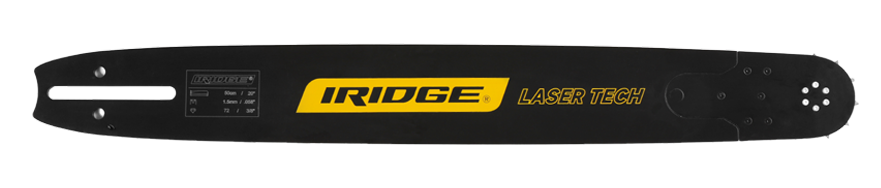
The measuring process stays the same regardless of nose design, but the type of bar you're replacing affects what happens after you have that number. A hardnose guide bar is a single solid piece, so once it's worn at the tip, the whole bar typically needs replacing.
A replaceable sprocket nose guide bar works differently — the nose wears independently of the body, and swapping just that component can extend the bar's usable life well past what a hardnose design allows. Either way, correct chain tension matters for how evenly the bar wears over time; how chain tension affects a guide bar's wear resistance is worth understanding before you reinstall anything.
Matching Bar Length to the Right Chain Pitch
Knowing the bar length is only half the equation. The chain has to match both the bar's length and its pitch — the distance between drive links — or it won't seat correctly in the groove no matter how precisely you measured.
Common pitches include 3/8-inch pitch chain for mid-size saws doing regular cutting work, and .325-inch pitch chain for saws built around smoother, lower-vibration cuts. If you're unsure which pitch your saw uses, a quick look at the different types of chainsaws and saw chains will help narrow it down before you order.
Why an Incorrect Bar Length Is a Safety Issue
A bar and chain that don't match aren't just an inconvenience — they change how the saw behaves under cutting pressure. Mismatched components can increase the risk of kickback, the sudden upward reaction that happens when the tip of the bar contacts material unexpectedly.
This isn't a minor concern in professional settings. OSHA's logging operations standard requires chain saws placed into service to meet ANSI B175.1 kickback provisions, and a saw running the wrong bar length or an incompatible chain can undermine those built-in protections even if the saw itself is compliant. Getting the measurement right the first time isn't just about fit — it's part of keeping the saw's safety systems working the way they were designed to.

