

 English
 Español

Content
The Measurement Everyone Gets Wrong
Grab a tape measure and run it from the very tip of a chainsaw bar to the very back of it, and you'll get a number — just not the right one. Chainsaw bars aren't sized by their total length from tip to tail. They're sized by their useful length, meaning the portion of the bar that actually extends out from the body of the saw.
This distinction trips up a lot of people buying their first replacement bar, because a bar's overall physical length and its "called length" (the number stamped on the box or listed in a catalog) are almost never the same figure. Get this wrong and the replacement bar you order won't match your saw's mounting or bar-length rating, even if it looked correct at a glance.
Step-by-Step: Measuring the Bar
With the chainsaw off and the chain brake engaged, lay the bar flat on a stable surface. Extend a tape measure from the outward-facing tip of the bar to the point where the bar meets the body of the saw — not to the very end of the mounting tang, but to where the bar's cutting surface actually stops.
Once you have that number, round it up to the nearest even number. A measurement of 17 ½ inches becomes an 18-inch bar; 15 ¾ inches rounds to 16. This rounded figure is the bar's called length, and it's what you'll use when ordering a replacement or matching a compatible chain.
No Tape Measure? Check These Two Places
If measuring directly isn't practical, the bar length is often stamped near the tail end of the bar itself, close to where it mounts to the saw. Wear and grime can make this hard to read on an older bar, but it's worth checking before reaching for a tape measure.
Failing that, count the drive links on the chain currently mounted to the bar. Since chain length and bar length are directly related, the drive link count can be cross-referenced against a manufacturer's chart to back into the correct bar size — a useful workaround when the stamped numbers have worn away entirely.
Matching Bar Type to the Job
Bar length is only half the sizing question — bar construction matters just as much once you know what length you're working with. Laminated guide bars built for lighter, more flexible cutting use multiple thinner steel layers, which keeps the bar lighter and more forgiving for occasional or precision work.
Hardnose guide bars designed for heavy-duty, repetitive cutting take the opposite approach, using a solid one-piece nose that resists the wear that comes from constant contact with dense or dirty material — a common choice for firewood processing or frequent commercial use. For anyone trying to extend service life without replacing the whole bar, replaceable sprocket nose guide bars that extend service life let the nose — typically the first part to wear out — be swapped independently of the rest of the bar body.
There's a more detailed look at how guide bar design affects overall chainsaw safety and efficiency worth reading before choosing between these construction types, since the right bar length paired with the wrong bar type can still leave performance on the table.
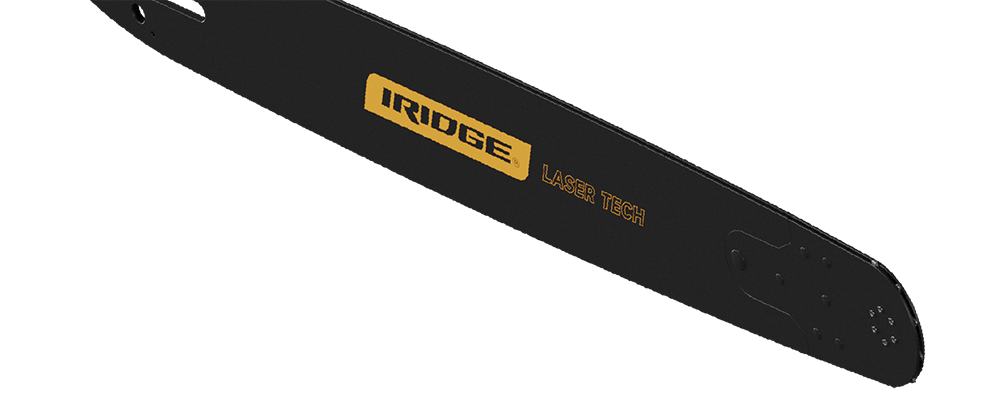
Don't Forget the Chain Has Its Own Measurements
A correctly sized bar is only useful with a chain that actually fits it. Chain sizing runs on three separate measurements: pitch (the distance between drive link rivets), gauge (the thickness of the drive links where they sit in the bar's groove), and the total number of drive links. All three need to match the bar's groove width and sprocket pitch, not just its overall length.
Chain tension also plays a role in how long both the chain and bar last once everything is properly matched. How chain tension on the guide bar affects wear resistance covers why a chain that's too loose or too tight accelerates wear on the bar's groove regardless of how correctly it was sized in the first place. For anyone assembling a complete replacement cutting system, the full range of chainsaw chains matched to pitch and gauge makes it easier to pair the right chain to a newly measured bar in one pass.
As one industry sizing guide puts it, a guide bar should be measured by its useful length rather than its total length from tip to tail, which remains the single most important thing to get right before ordering any replacement part.

