

 English
 Español

Chainsaw bar size is the single most important specification decision when buying or replacing a guide bar. Choose too short, and the saw cannot complete a single-pass cut through large timber — forcing repeated repositioning that increases fatigue and kickback risk. Choose too long, and the engine labors under a load it was not designed to sustain, accelerating wear and creating dangerous handling characteristics. Every chainsaw has an optimal bar length range defined by its engine displacement, power output, and mechanical design. This guide maps those ranges to specific tasks, user types, and bar configurations so that selecting the correct size becomes a straightforward decision rather than a guessing process.
Content
What the Chainsaw Bar Size Actually Means
When a chainsaw is described as a "16-inch" or "20-inch" saw, that figure refers to the effective cutting length of the guide bar — not the bar's total physical length from end to end. The effective cutting length is measured from the point where the bar emerges from the chainsaw body to the tip of the bar. This is the length that matters for practical cutting purposes: it represents the maximum diameter of wood the saw can cut through in a single pass.
The total bar length — measured end to end with the bar removed from the saw — is always somewhat longer than the cutting length because a portion of the bar sits inside the chainsaw housing, attached to the drive mechanism. This distinction matters when ordering a replacement bar: manufacturers specify bars by cutting length, not total length. If you measure your current bar while it is still mounted on the saw, you are measuring the cutting length, which is the correct figure to use when ordering a replacement.
Because chainsaw bars are manufactured and sold in even-inch increments, any odd measurement is rounded up to the next even number. A bar with a 15-inch cutting length is a 16-inch bar. A measurement of 17.5 inches rounds up to an 18-inch bar. This rounding convention is universal across manufacturers, so there is no 15-inch or 17-inch bar in standard production — only 14, 16, 18, 20, and so on.
Bar size has a direct relationship with safety. A bar that exceeds the maximum length recommended for a given engine forces the operator to work with a saw that cannot maintain consistent chain speed under load. When chain speed drops, the risk of kickback — a sudden, violent upward rotation of the bar caused by the chain snagging at the nose — increases significantly. The maximum bar length for any chainsaw is not a suggestion; it is an engineering limit set by the manufacturer based on the power output the engine can reliably sustain.
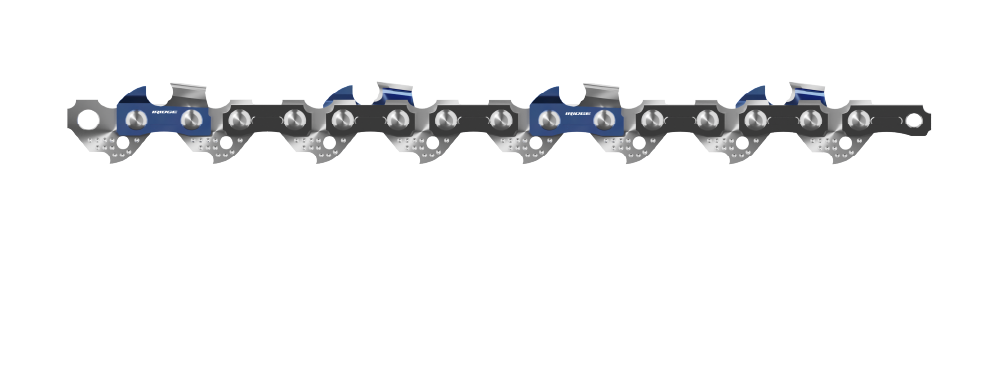
Chainsaw Bar Size by Task: The Core Selection Rule
The most reliable starting point for bar size selection is the task itself. The foundational rule is simple: the bar should be at least 2 inches longer than the diameter of the wood you intend to cut. This ensures the saw completes a full single-pass cut without the nose of the bar becoming buried in the timber — the condition most likely to trigger kickback. A 14-inch bar cutting a 12-inch log satisfies this rule with a 2-inch margin; an 18-inch bar on a 20-inch log does not, and two-pass cutting with repositioning is required.
| Task | Typical Wood Diameter | Recommended Bar Length |
|---|---|---|
| Limbing and pruning | Up to 6 inches | 10–14 inches |
| Bucking small logs / firewood | 6–12 inches | 14–16 inches |
| Felling medium trees | 12–18 inches | 16–20 inches |
| Felling large trees | 18–28 inches | 20–28 inches |
| Professional logging / milling | 28 inches and above | 28–42 inches |
For residential users performing occasional yard work — clearing fallen branches after a storm, cutting firewood from smaller logs, removing a small tree — a 14 to 16-inch bar covers the vast majority of tasks without requiring a heavy, high-displacement saw. This size range offers the best balance of maneuverability, weight, and cutting capacity for general-purpose home use.
For landowners dealing with medium timber, woodlot management, or regular tree felling, an 18 to 20-inch bar provides sufficient reach for most trees encountered in residential and semi-rural settings without requiring the physical strength and experience that longer bars demand. A 20-inch bar can cut through a tree trunk up to 18 inches in diameter in a single pass — adequate for the majority of hardwood and softwood species at typical felling sizes.
Professional arborists, loggers, and forestry workers routinely use bars from 20 to 42 inches, matched to high-displacement engines capable of sustaining the chain speed and torque those lengths demand. At these sizes, bar handling requires significant experience — the weight and rotational forces involved in a kickback event at the tip of a 36-inch bar are substantially more dangerous than the same event on a 16-inch residential saw.
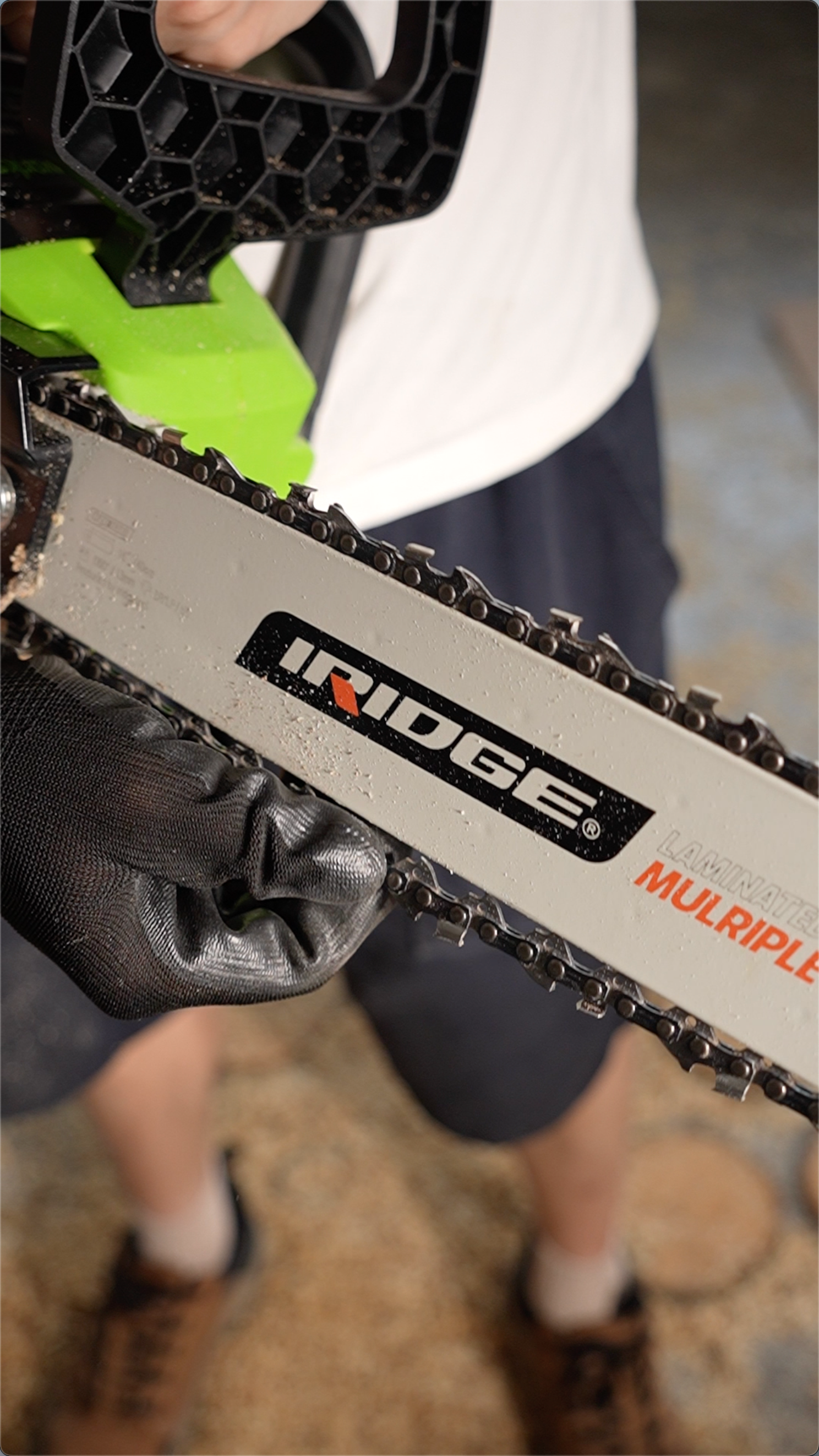
Matching Bar Length to Engine Power
Bar length and engine power are inseparable specifications. A bar that is correctly sized for a task may still be wrong for a particular saw if the engine cannot drive the chain at safe operating speed across the full bar length under cutting load. The relationship between engine displacement (measured in cubic centimeters for gas saws, or watts/voltage for electric and battery-powered saws) and maximum usable bar length is well-established in chainsaw engineering.
| Engine Displacement (cc) | Recommended Bar Length Range | Typical User Category |
|---|---|---|
| Under 25 cc | 10–12 inches | Light pruning, residential |
| 26–35 cc | 12–16 inches | Homeowner general use |
| 36–45 cc | 14–20 inches | Homeowner to prosumer |
| 46–60 cc | 16–24 inches | Prosumer / semi-professional |
| 61–75 cc | 18–28 inches | Professional |
| 76–90 cc | 24–36 inches | Professional / commercial |
| 90 cc and above | 32–42 inches | Forestry / milling |
For electric corded chainsaws, the equivalent guidance runs by wattage: saws rated at 1,200–1,800W are suited to bars of 12–16 inches; 1,800–2,400W models support 16-inch bars comfortably; models above 2,400W can handle 18-inch bars. Battery-powered chainsaws (typically 36V to 60V platforms) generally support bars of 14–20 inches depending on the voltage platform and battery capacity, with most consumer-grade battery saws performing best at 16 inches or below.
Running a bar longer than the engine's recommended maximum does not simply reduce performance — it causes the chain to slow under load, which changes the cutting dynamic from clean slicing to aggressive grabbing. This grabbing behavior is the mechanical precondition for kickback, and it also accelerates wear on the drive sprocket, bar groove, and chain at a rate disproportionate to the overload. The engine itself runs hotter and reaches its thermal limits faster, shortening service life measurably.
Chainsaw Bar Types and Which Size They Come In
Bar size selection cannot be made in isolation from bar type. The three primary guide bar constructions available — hardnose, replaceable sprocket nose, and laminated — each cover distinct size ranges and are optimized for different use intensities. Reviewing the full range of chainsaw guide bar options reveals how construction type and available lengths interact across professional and consumer applications.
- Hardnose guide bars: Constructed from a single solid piece of steel with a fixed, non-moving tip. The absence of a nose sprocket means there are fewer moving parts to wear or fail, making hardnose bars the most durable option for demanding environments — harvesting, milling, and high-cycle professional use. The fixed nose does generate more friction at the tip than a sprocket nose design, which increases the heat load on both the bar and chain at that point. Hardnose bars are commonly available from 18 inches upward and are the standard choice for professional logging bars above 24 inches.
- Replaceable sprocket nose guide bars: Feature a small roller bearing sprocket at the tip that reduces friction as the chain travels around the nose. The sprocket nose significantly reduces heat buildup at the bar tip and extends chain life by smoothing the chain's direction change at the end of each pass. When the nose sprocket wears out — the primary wear point on this bar type — it can be replaced without discarding the entire bar, reducing long-term operating costs. Available across the full size range from 14 to 42 inches, replaceable sprocket nose bars are the most versatile option for both prosumer and professional use.
- Laminated guide bars: Built by bonding multiple steel layers together, producing a bar that is lighter than an equivalent solid-steel bar while retaining adequate stiffness for general cutting tasks. The weight reduction is meaningful for operators working for extended periods, particularly arborists and land-clearing crews where saw fatigue is a practical concern. Laminated bars are most commonly available in the 14 to 24-inch range and are well-suited to residential and prosumer applications where maximum durability under extreme load is less critical than manageable weight.
How Bar Size Affects Chain Specifications
Bar length determines the number of drive links required in the chain — and drive link count, combined with pitch and gauge, defines the complete chain specification. A chain matched to a 16-inch bar cannot fit a 20-inch bar of the same pitch and gauge because the longer bar requires more drive links to complete the loop around the extended bar perimeter. Ordering a replacement chain based on bar length alone, without confirming pitch and gauge, is one of the most common purchasing errors in chainsaw maintenance.
The three measurements that fully define a chainsaw chain are pitch, gauge, and drive link count. Pitch is the distance between drive links, measured by taking the center-to-center distance across three consecutive rivets and dividing by two. The most common values are 3/8-inch LP (low profile, for smaller homeowner saws), 3/8-inch standard (the most widely used professional pitch), .325-inch (common on mid-range saws), and .404-inch (heavy-duty professional and harvester applications). Gauge is the thickness of the drive links that ride in the bar groove — 0.050-inch and 0.058-inch account for the majority of chainsaws in the market. The full specification for any chain must include all three values: for example, a chain stamped "3/8 – 72DL – .050" specifies 3/8-inch pitch, 72 drive links, and 0.050-inch gauge. For a comprehensive reference on reading these markings and measuring each specification manually, the complete chainsaw chain identification guide covers each measurement method in full detail.
Bar size and chain pitch must be compatible for the combination to work safely. A high-pitch chain (.404-inch) on a bar designed for a lower-pitch chain (.325-inch) will not mesh correctly with either the bar groove geometry or the drive sprocket, creating dangerous operational instability. Always confirm that the replacement chainsaw chain pitch matches both the existing bar specification and the drive sprocket on the saw body — all three components must share the same pitch to function as a system.
Choosing the Right Bar Size: A Practical Decision Guide
For most buyers, bar size selection becomes straightforward once the user category and primary task are defined. The following framework applies the bar size, engine power, and bar type guidance above to three clearly defined user profiles.
Homeowner / occasional user: Primary tasks include storm cleanup, pruning branches up to 8 inches in diameter, cutting firewood from logs under 14 inches, and removing small ornamental trees. The correct bar range is 14 to 16 inches, matched to a saw in the 30–40cc gas range or a corded electric model rated at 1,400–1,800W. A laminated or replaceable sprocket nose bar in this size range offers the best combination of light weight and adequate durability for infrequent use. Surge protection from overload is not typically needed at this scale, but choosing a bar at the upper end of the recommended range for the engine (rather than exceeding it) provides useful cutting margin without stressing the motor.
Prosumer / serious landowner: Primary tasks include regular tree felling up to 18 inches in diameter, managing woodlots, cutting firewood in volume, and occasional storm or land-clearing work. The correct bar range is 18 to 20 inches, matched to a saw in the 45–60cc range. A replaceable sprocket nose bar in this size provides the durability for moderate-intensity regular use while keeping the nose friction and heat load manageable. Battery-powered saws on 60V platforms can perform adequately in this range for lighter work within this category, though gas remains the more capable option for sustained high-volume cutting.
Professional / commercial user: Primary tasks include felling large timber, high-volume log processing, land clearing, and specialized applications such as milling. Bar lengths start at 20 inches and extend to 42 inches depending on the specific application, matched to engines of 60cc and above. Hardnose bars are standard for the largest sizes where durability under continuous load is the overriding requirement. At this level, bar selection should account for the specific timber species and diameter range encountered regularly — a logger working primarily with large-diameter hardwood requires different specifications than an arborist managing mixed urban forestry. Chain pitch at the professional level commonly moves to .404-inch for high-torque milling and harvesting applications where cutting speed and drive link strength are prioritized over lightweight handling.
In all three categories, the checklist before finalizing a bar size selection should confirm: the bar cutting length falls within the engine's recommended maximum; the bar type matches the use intensity (hardnose for sustained professional load, laminated for weight-sensitive applications); and the chain pitch, gauge, and drive link count are verified against the bar specification before ordering. These three checks, applied consistently, eliminate the most common sizing errors and ensure the cutting system performs as designed from the first cut onward.

